It's just a dare or stunt food.
The internet loves to frame edible insects as challenges. In Shandong, families have been collecting nymphs for generations as a seasonal tradition.
No. 011 / Misunderstood Chinese Food
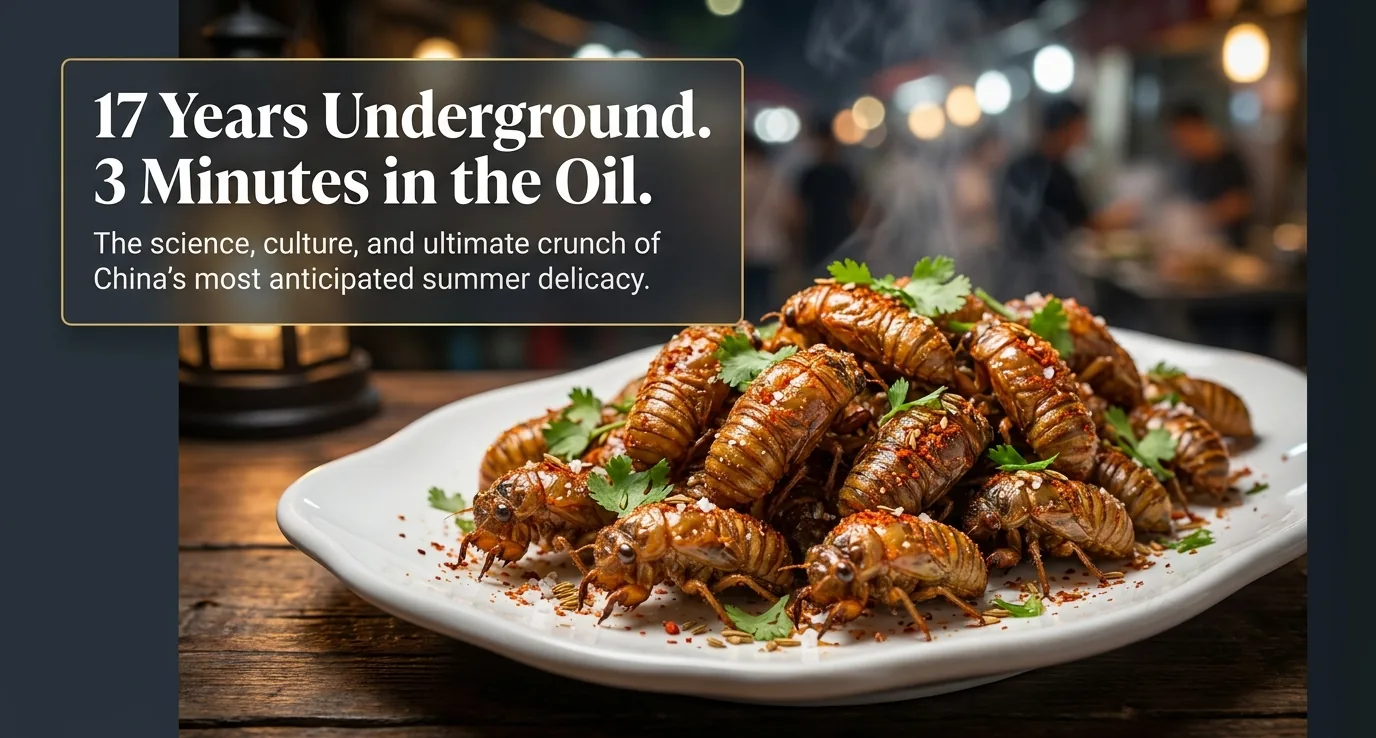
An insect that spent up to seventeen years buried in soil, accumulating protein and fat with single-minded patience, emerges for one summer night — and becomes one of the most texturally extraordinary snacks in Chinese street food culture. This is not a dare. This is biology doing the prep work so the cook doesn't have to.
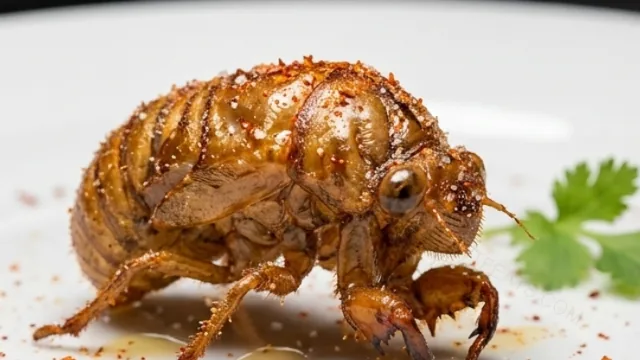
This is not a stunt or a fear-factor challenge. It is a seasonal delicacy with legitimate culinary and nutritional credentials.
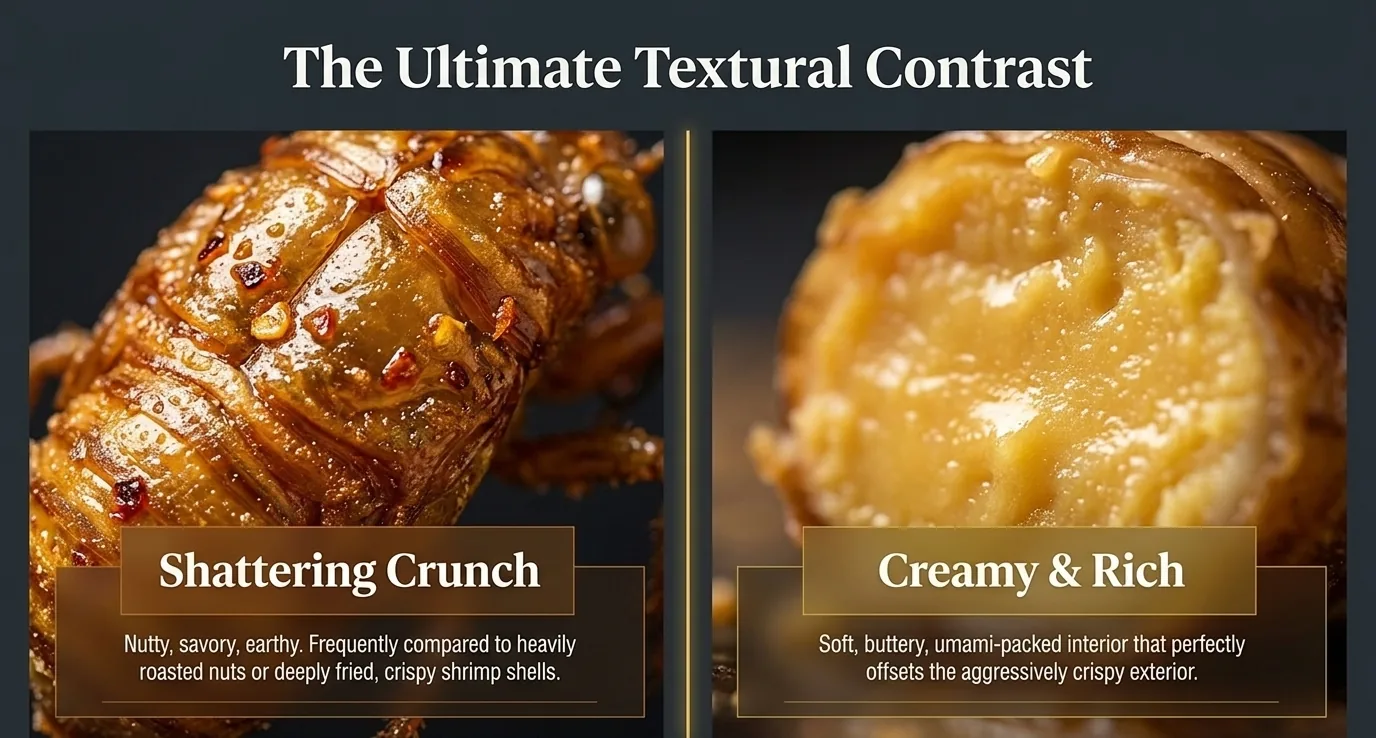
Properly fried at 180–190°C, the exoskeleton becomes genuinely crispy — it shatters rather than bends — while the interior sets into a rich, creamy paste.
The harvest window is brutally short: three to four weeks in late June to early August. Timing is everything.
What Is It?
Fried Cicada Nymphs, known in China as Zhiliao Hou (知了猴) or simply Cicada Nymphs, are a traditional seasonal delicacy enjoyed across northern and eastern China. These insects are collected shortly before they emerge from the ground and transform into adult cicadas — while still soft-shelled, plump, and packed with the protein and fat reserves accumulated over years of feeding on tree root sap.
Unlike mature cicadas with wings, the nymph at this stage has a smooth shell and a mild flavor that becomes wonderfully crispy when deep-fried. Garnished with sea salt, cumin, chili powder, garlic, and green onions, it is a snack that rewards the patient — both the insect and the person waiting for cicada season every year.
The Anatomy
The cross-section of a properly fried cicada nymph makes the case by itself: a crispy, golden-brown exoskeleton that shatters cleanly when bitten, surrounding a dense, rich interior with a protein density higher than beef. The contrast between the aggressive crunch of the shell and the soft, creamy, umami-packed center is not achieved by human technique — it is the result of seventeen years of biological preparation.
Myth vs Fact
The internet loves to frame edible insects as challenges. In Shandong, families have been collecting nymphs for generations as a seasonal tradition.
Higher protein density than beef, chicken, or most conventional protein sources. Plus significant unsaturated fat and glutamate for umami.
First-timers are often surprised. The flavor is nutty, savory, rich, and slightly earthy — frequently compared to roasted nuts or crispy shrimp shells.
Lower than 180°C: greasy and soft. Higher than 190°C: burnt shell, raw interior. The 180–190°C window is non-negotiable.
Visual Story
Follow the cicada nymph from soil to street food: the seventeen-year underground preparation, the brutal summer harvest window, the three-minute fry that unlocks it all, and the four ways to finish it.
Follow the huntDeep Dive
The Maillard reaction on the exoskeleton, the self-basting fat layer, protein setting, and why 180°C is the only acceptable temperature.
Read the articleGuide
A tidy table of contents for the overview, the hunt, the science, and what comes next.
Browse chaptersHow to Eat It
Pick one up with chopsticks or fingers while still hot and crispy. Bite through the shell — it shatters cleanly — and enjoy the contrast with the creamy interior.
The Shandong night market standard: cold beer against the seasoned, nutty richness of the nymph. Sip, bite, repeat. The combination is deeply satisfying.
Served as a snack or appetizer alongside grilled skewers, stir-fried vegetables, or rice. The social context matters — this is summer tradition food, meant to be shared.