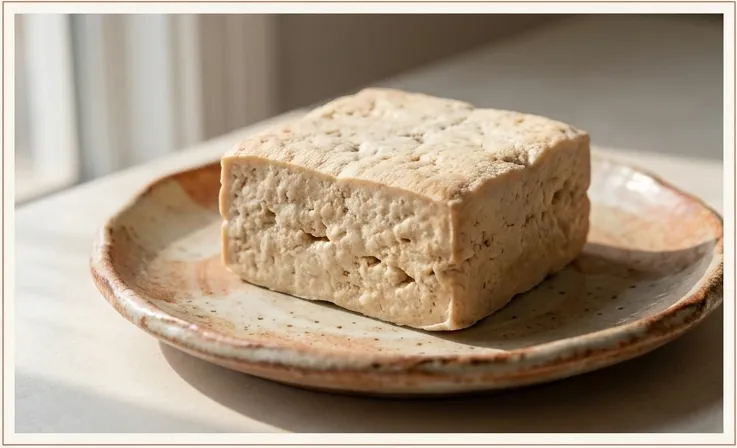
The first mistake is thinking stinky tofu is rotten. Rotten food is the result of uncontrolled microbial breakdown. Fermented food is the result of carefully guided microbial transformation. The difference is the difference between a compost heap and a cheese cave.
Stinky tofu starts with fresh tofu, a nearly flavorless block of coagulated soy milk. That blankness is by design. The tofu is a scaffold, a protein matrix waiting for microbes and enzymes to rebuild it into something unrecognizable.
1. The brine is a living ecosystem
The fermentation brine is a carefully prepared, plant-based culture built from rice wine, douchi (fermented black beans), dried shrimp, salt, bamboo shoots, and mustard greens. Sealed and left undisturbed for up to six months, it is incubation—not neglect. Each ingredient contributes its own microbial population.
Lactic acid bacteria, Bacillus, and Brevibacterium species colonize the tofu. The same Brevibacterium genus responsible for the aroma of washed-rind cheeses like Limburger also thrives here. They produce enzymes that break down soy proteins into peptides and free amino acids. This is where the deep savory flavor comes from. The same biochemical process makes miso, soy sauce, and aged cheese taste rich and complex.
2. The smell is chemistry, not decay
The notorious aroma comes mostly from volatile sulfur compounds, including hydrogen sulfide, methanethiol, and dimethyl sulfide. These are the same molecules that give cooked cabbage, certain aged cheeses, and durian their strong smells.
Ammonia traces also contribute, released as proteins break down into amino acids. The concentration is much lower than in genuinely spoiled food. Your nose reacts before your brain can assess the dosage.
Stinky tofu is shocking because it smells like something you should not eat. It is fascinating because the flavor underneath that smell is savory, nutty, and completely disarming.
3. Frying destroys the villain
Deep-frying is not just for texture. It is a chemical intervention. Most volatile sulfur compounds have boiling points below 190 degrees Celsius. The oil in a deep fryer sits around 180 to 190 degrees, meaning many of the worst-smelling molecules evaporate before the tofu reaches your mouth.
At the same time, the Maillard reaction browns the exterior, creating new aromatic compounds: roasted, nutty, and caramel notes. The contrast between crisp shell and custard-soft interior is not an accident. Fermentation weakens the protein network, so the inside stays tender even as the outside crisps.
4. Regional styles are different chemical experiments
4. The same chemical signature as revered Western cheeses
This is not a stretch. Stinky tofu, blue cheese, and aged Parmesan all rely on the same underlying mechanism: bacterial or fungal breakdown of proteins into glutamate. The key odor compound in stinky tofu is methanethiol. In blue cheese, it is methyl ketones. In aged Parmesan, butyric acid. All three produce glutamate as the primary flavor molecule. Stinky tofu is not an outlier in the fermented-food world. It follows the exact same biochemical playbook—it was just never marketed that way.
5. Regional styles are different chemical experiments
with vegetable fermentation as the backbone. Hunan-style often incorporates black beans, tea, and longer fermentation times, producing a darker, more intense product. Nanjing-style is steamed rather than fried, preserving more of the fermented character.
Each regional variation is a different set of microbial cultures, fermentation times, and finishing techniques. The result is not one food but a family of foods sharing a common ancestor: soybeans, brine, and time.
5. Why the texture transforms
Fresh tofu is a calcium or magnesium-coagulated soy protein gel. During fermentation, proteolytic enzymes partially break down the protein network. The gel loosens. The texture shifts from firm and springy to soft and custard-like. When fried, the outer layer dehydrates and crisps, but the weakened interior stays creamy because there is less protein structure to toughen.
How to try it without panicking
Find a Taiwanese night market. Order the fried version with pickled cabbage. Do not smell the brine. Eat it hot, when the crisp exterior is at maximum contrast with the soft interior. The chili, garlic, and pickled cabbage are not optional. They are the bridge.
- Fermentation time: up to 6 months.
- Key process: microbial and enzymatic breakdown of soy proteins.
- The smell: volatile sulfur compounds, mostly destroyed by frying.
- Best beginner style: Taiwanese deep-fried with pickled cabbage.