It's rubbery stomach lining.
Only if you overcook it. Rubber is a timing failure, not an ingredient flaw.
No. 009 / Misunderstood Chinese Food
Let's be honest about what this is: the third stomach of a cow. Not the first, not the second — the omasum, a chamber of thin, leaf-like folds that looks like a honeycomb and cooks like a stopwatch. In Sichuan and Chongqing hot pot, no meal is complete without it. Dip it for ten to fifteen seconds and it is crisp, tender, and juicy. Leave it for thirty and it is rubber. The margin is the whole game.
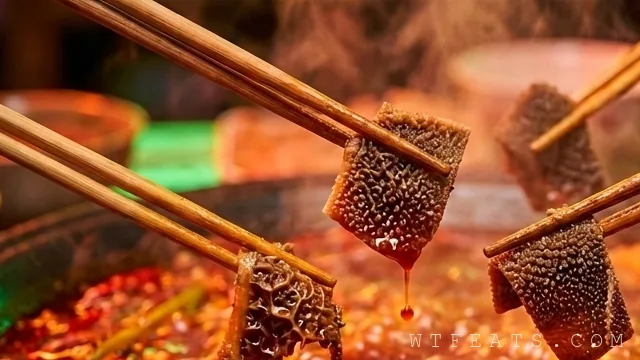
"Beef tripe" covers four stomachs. Máo dù is one specific chamber — the omasum, the third — with layered, honeycomb-like folds no other tripe has.
Máo dù's own flavor is famously mild. Its popularity comes from texture: crisp, tender, slightly chewy, juicy. Texture is considered more important than flavor.
It cooks in less than twenty seconds. Overcooking makes it tough; the sweet spot keeps it crisp. Crisp is everything — rubbery is ruin.
What Is It?
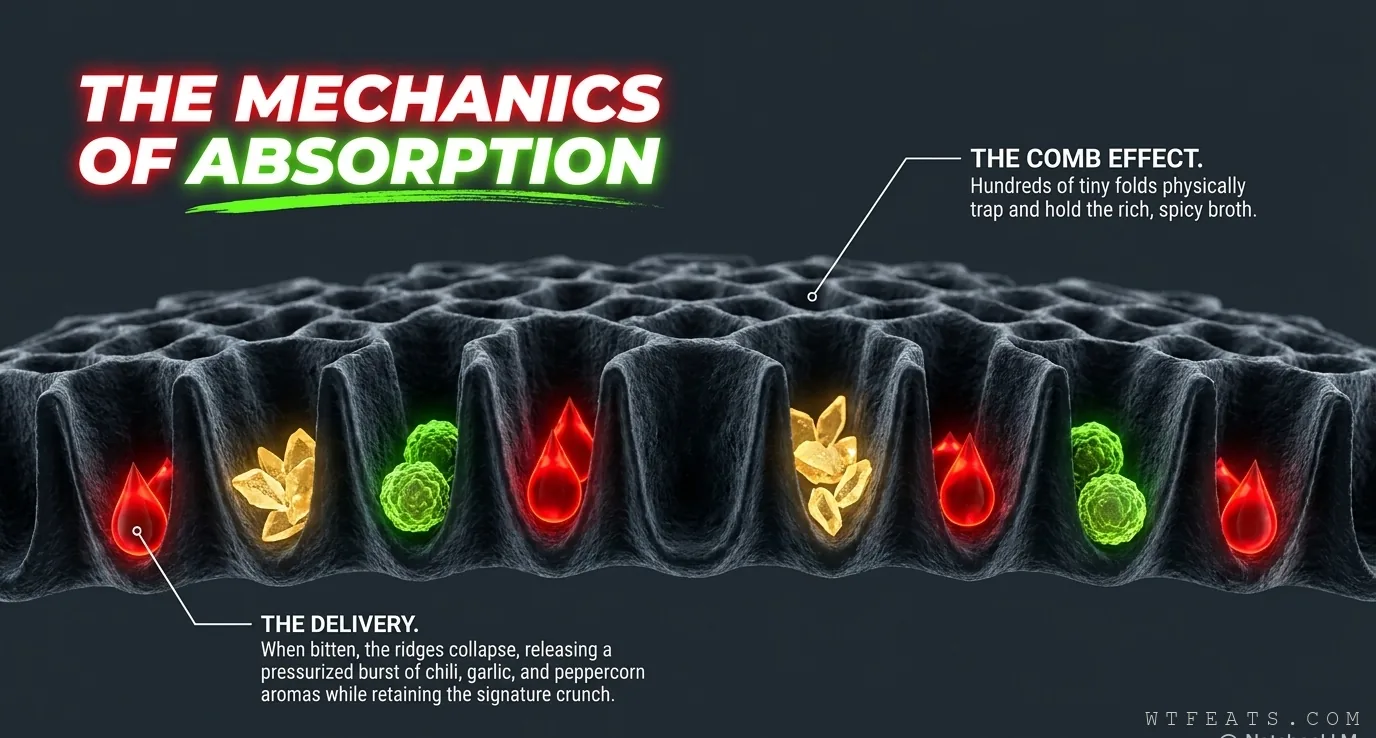
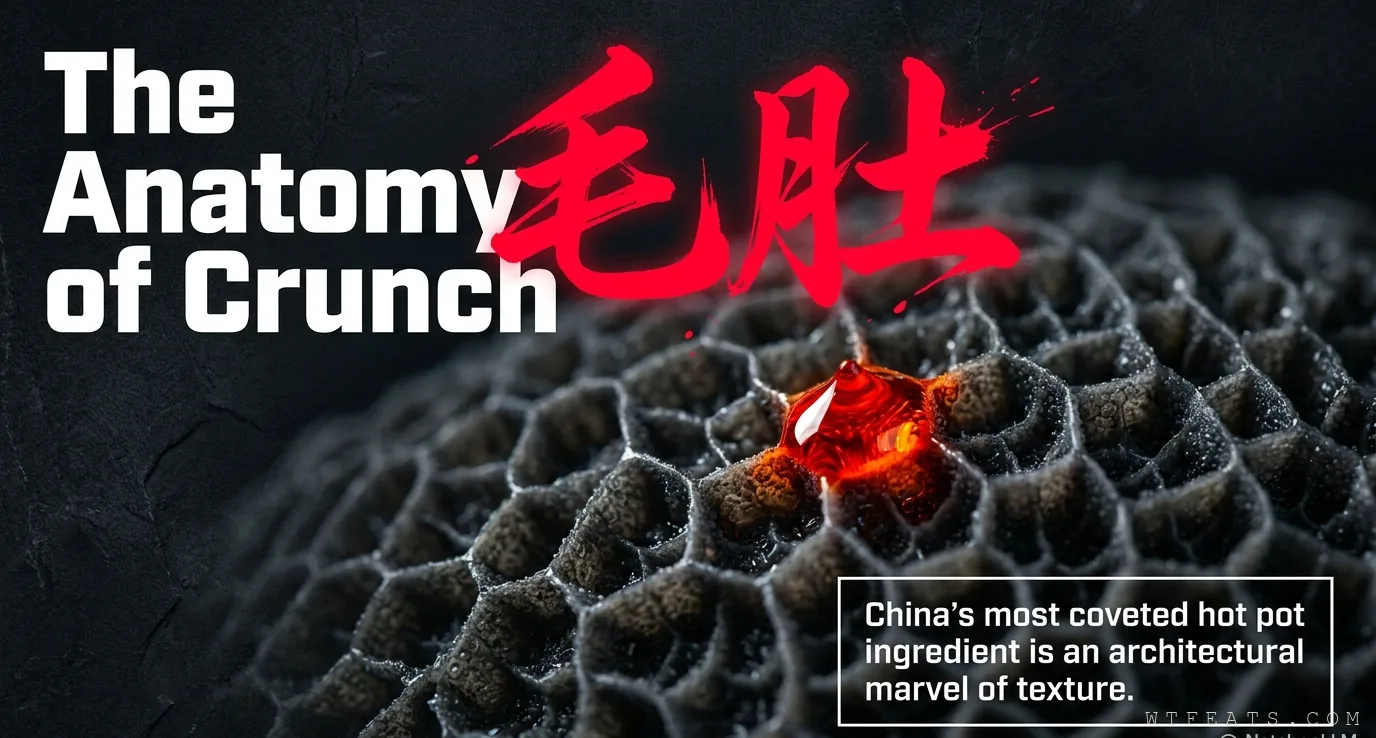
Máo dù (毛肚) is beef omasum — the third stomach chamber of a cow. Fresh, it is dark gray to black, made of thin, leaf-like layers covered in tiny textured ridges. Those hundreds of tiny folds are not decoration: they are engineered to absorb flavorful broth, which is exactly why máo dù became one of the most famous ingredients in Chinese hot pot, especially in Sichuan and Chongqing cuisine.
Unlike many other cuts of meat, máo dù is usually served raw and cooked directly at the dining table, dipped into boiling broth for about ten to fifteen seconds. When it hits spicy Sichuan broth, it absorbs the aromas of chili, garlic, and Sichuan peppercorns while keeping its signature crunch. In restaurants, it arrives beautifully arranged on large white plates, the layers spread out like flower petals — delicate to look at, unforgiving to cook.
The Anatomy
Hold a sheet of máo dù up and the argument makes itself: hundreds of tiny folds and ridges, a honeycomb built for one purpose — trapping broth. Every crevice catches chili oil, garlic, and peppercorn aroma on the way from pot to mouth. The crunch comes from the layered structure; the flavor comes from whatever the folds can hold. This is the mechanics of absorption, and the omasum is a machine built for it.
Myth vs Fact
Only if you overcook it. Rubber is a timing failure, not an ingredient flaw.
Proper cooking keeps máo dù crisp and tender — hot pot lovers insist it should be crisp but never rubbery.
Its own flavor is very mild. If you came for a strong taste, you came to the wrong stomach.
Crisp, tender, slightly chewy, juicy after cooking — texture is considered more important than flavor, and the folds carry the broth's flavor for it.
Visual Story
Follow the omasum from the third chamber to the bubbling pot: the honeycomb anatomy, the mouthfeel radar, the preparation protocol, the law of Seven Up Eight Down, and the dipping-sauce formula that finishes the job.
Enter the ritualDeep Dive
The third chamber, the folds that trap broth, the ten-to-fifteen-second sweet spot, the sesame-oil dip, and why timing máo dù is a public performance.
Read the articleGuide
A tidy table of contents for the overview, the ritual, the craft, and what comes next.
Browse chaptersHow to Eat It
The famous Sichuan rule: dip the máo dù into boiling broth and move it up and down several times — about ten to fifteen seconds total. Never walk away from your chopsticks.
The standard landing zone: a small bowl of sesame oil with garlic. It cools the scalding piece and carries the broth's aroma without drowning the crunch.
Chili oil, soy sauce, or vinegar join the dip as enhancers. The crunch stays in charge; everything else is a supporting act.