Visual Story

The anatomy of crunch: the máo dù ritual

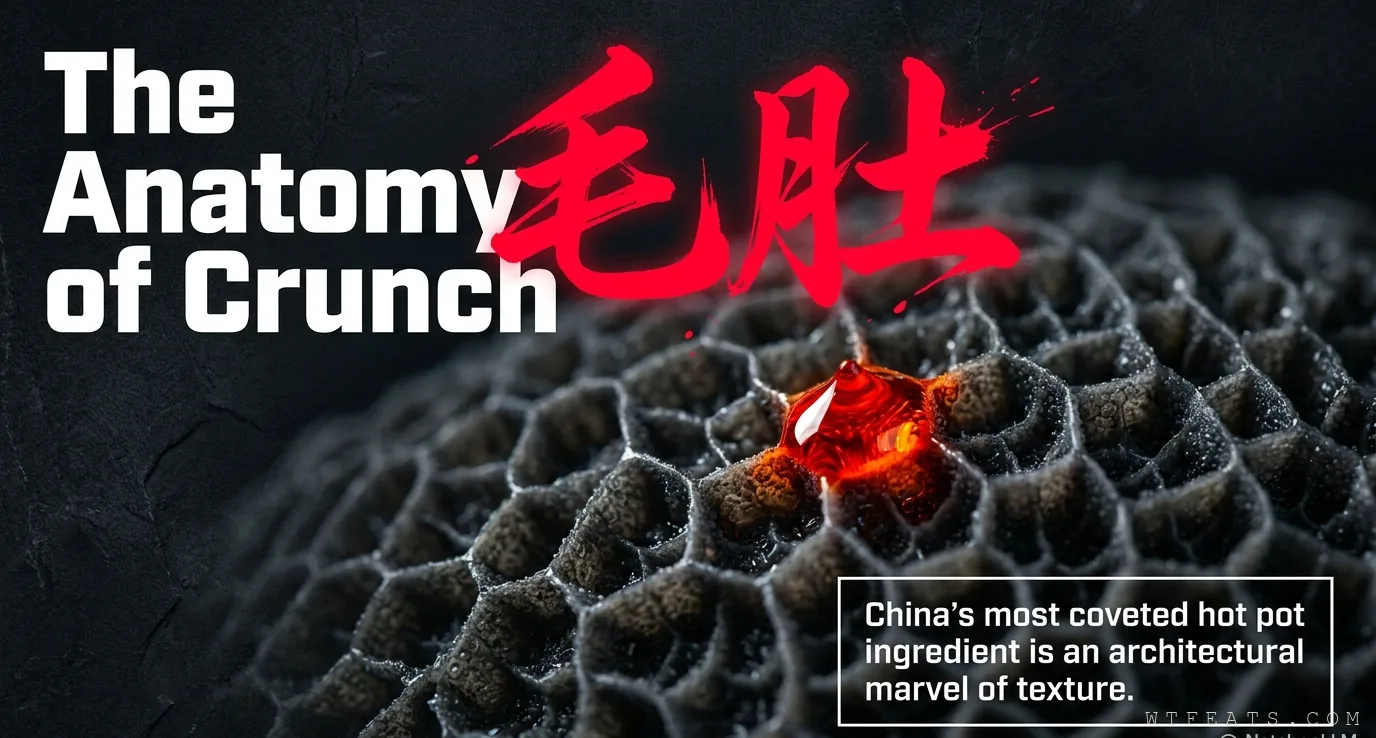
This is the third stomach of a cow — dark, folded like a honeycomb, and mild almost to the point of silence. And yet in Sichuan and Chongqing, no authentic hot pot meal is complete without it. What happens between the white plate and the bubbling broth is a ritual with a law, a stopwatch, and a formula. Here it is, stage by stage.

The Anatomy of Crunch title slide: máo dù honeycomb macro photography with red calligraphy
The Canvas
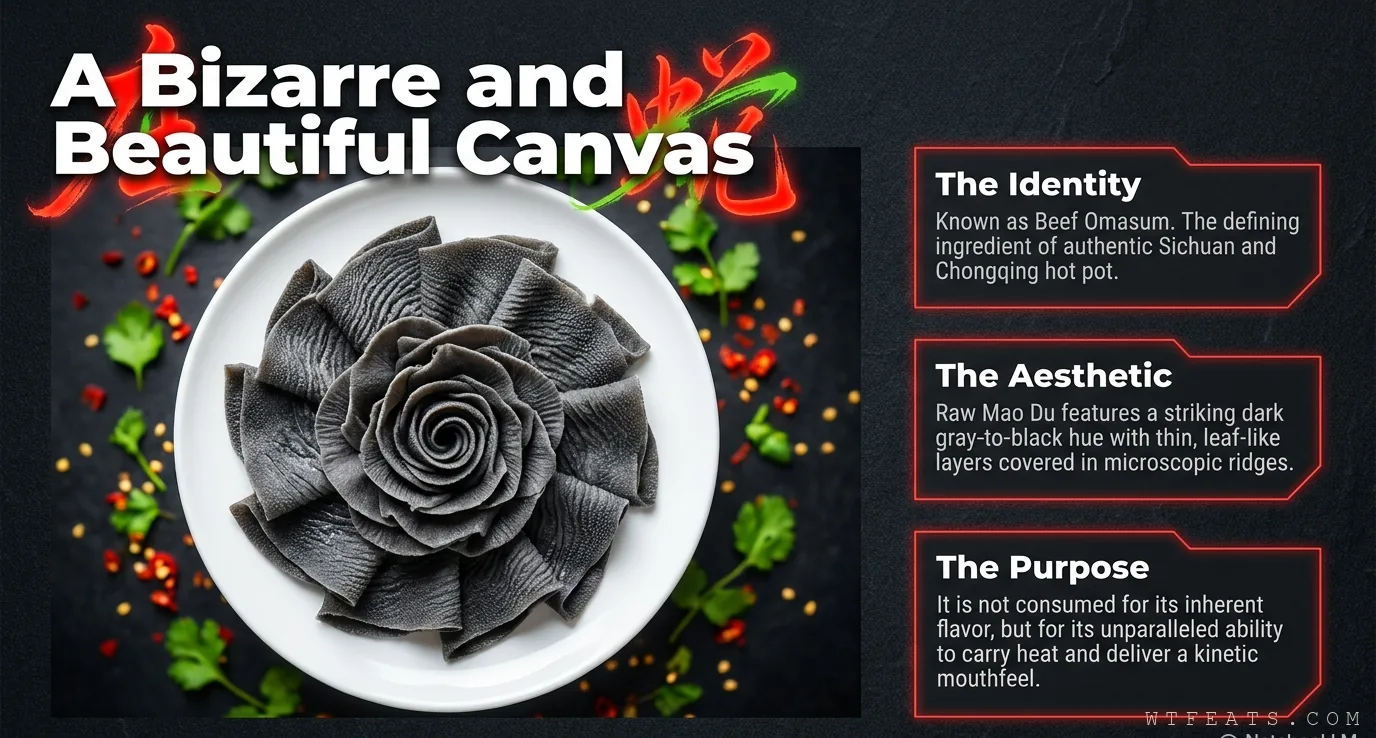
A bizarre and beautiful canvas: fresh máo dù arranged like a rose of petals on a white plate, with identity, aesthetic, and purpose

A bizarre and beautiful canvas.

In restaurants, fresh máo dù arrives on large white plates with the layers spread out like flower petals — dark gray to black, delicate yet firm. The plating is not vanity. Those thin, leaf-like layers, covered in tiny textured ridges, are a canvas with exactly one purpose: to catch broth. It is typically served alongside fresh vegetables, mushrooms, tofu, thinly sliced beef, and a dipping station of sesame oil and chili sauce.
The Source
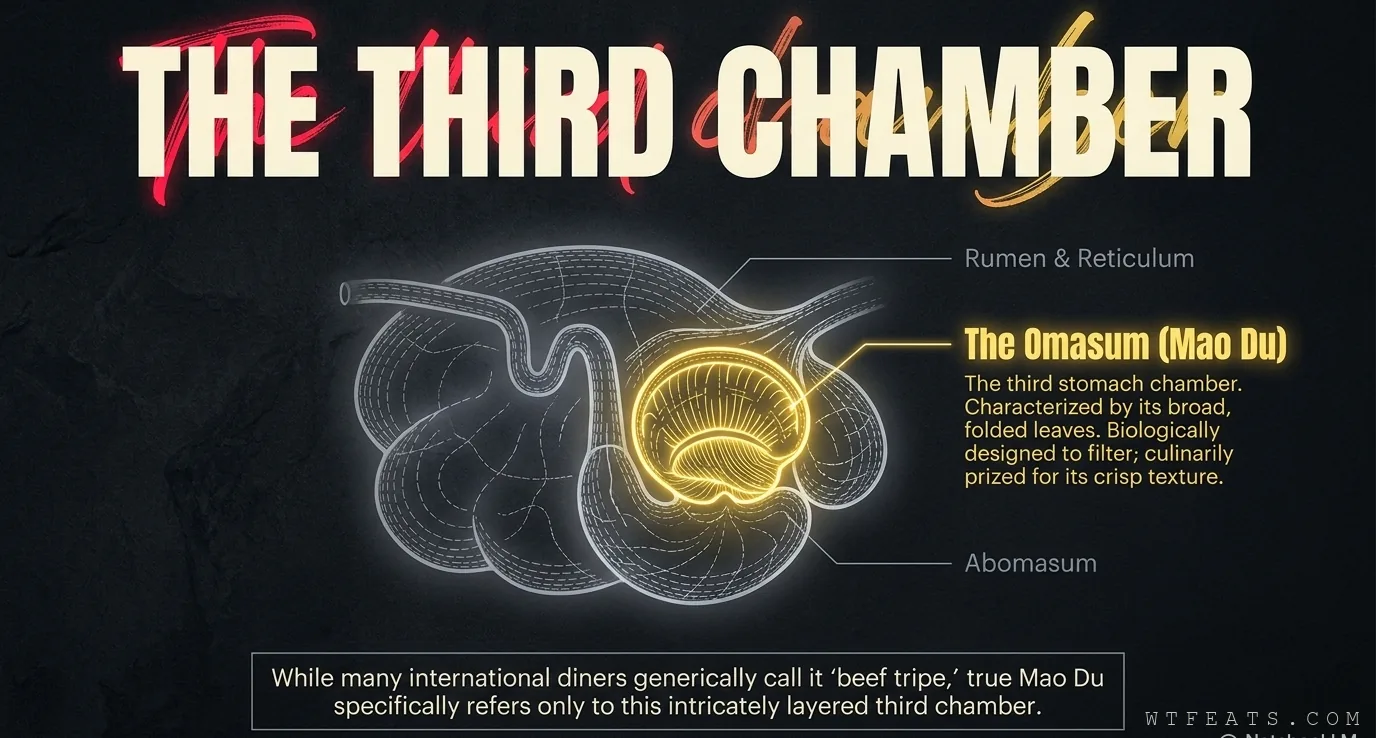
The third chamber: a cow stomach diagram with the omasum highlighted among the four stomachs

Not the first. Not the second. The third.

A cow has four stomach chambers, and "beef tripe" could come from several of them. Máo dù is specific: it is the omasum, the third chamber — the one with a distinctive layered structure and honeycomb-like folds. That specificity is why máo dù behaves differently from any other tripe in the pot.

Many diners say "tripe." Máo dù means the omasum.

The Mouthfeel
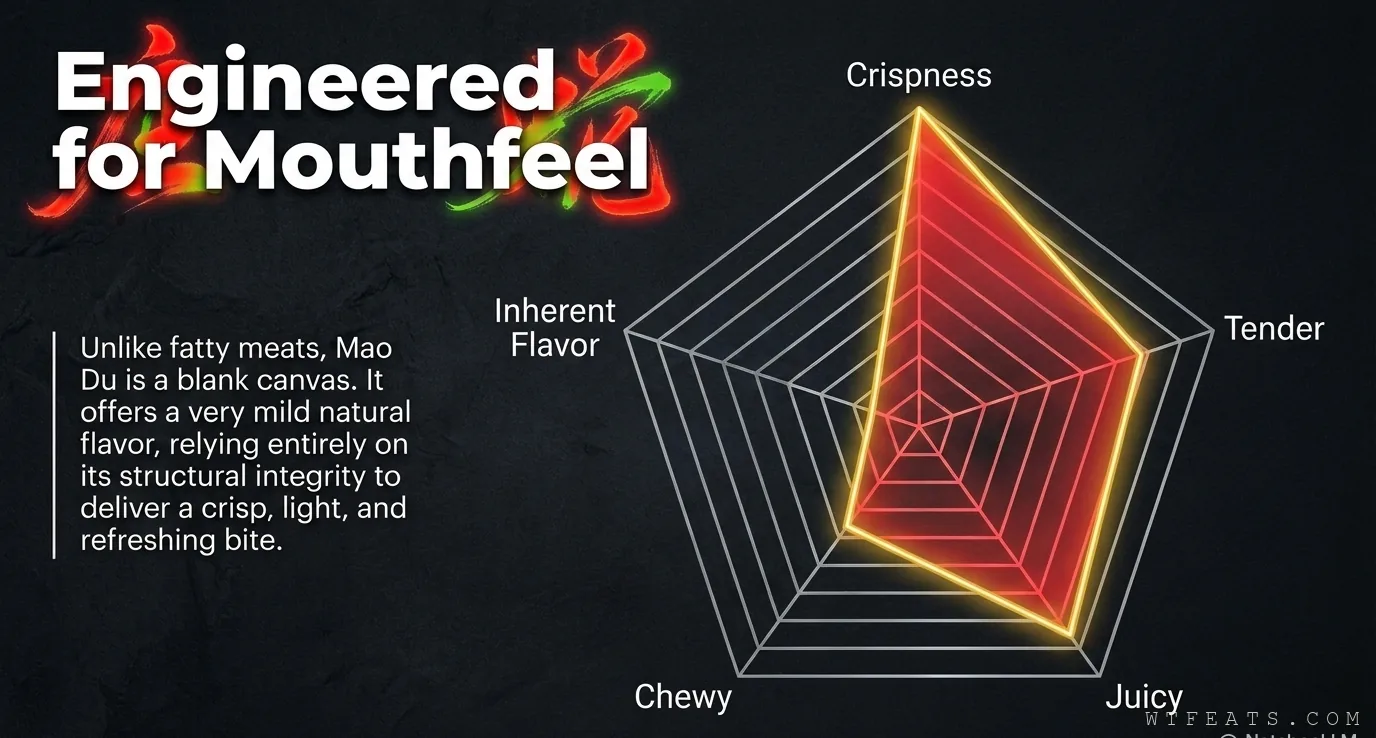
Engineered for mouthfeel: a radar chart of máo dù scoring high on crispness, tender, juicy, and chewy, low on inherent flavor

Engineered for mouthfeel.

Plot máo dù on a chart and the shape tells the whole story: crispness, tenderness, juiciness after cooking, and a slight chew all score high — inherent flavor barely registers. Unlike fatty meats, máo dù has a very mild flavor; its popularity comes from texture alone. In hot pot culture, texture is considered more important than flavor, and máo dù is the proof.

Texture is the point. The broth does the talking.

The Protocol
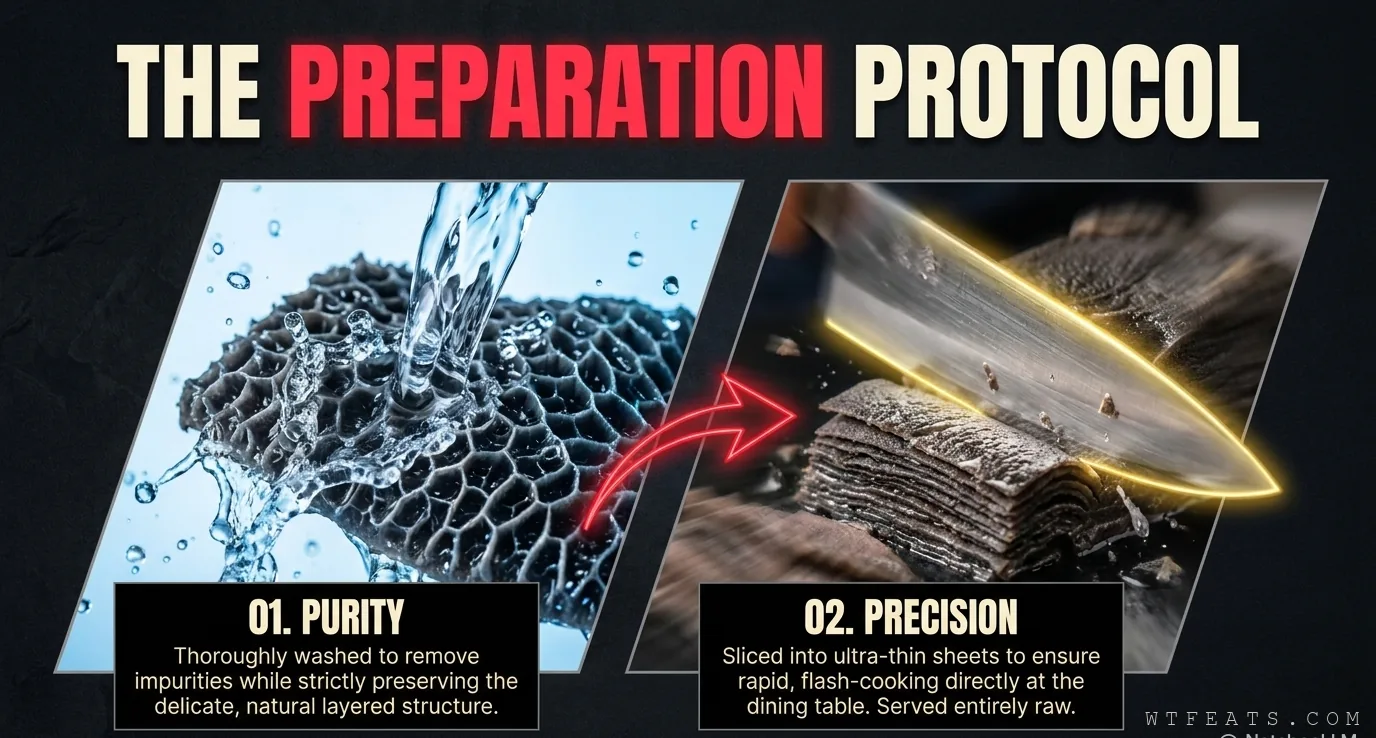
The preparation protocol: step 01 purity, washing the omasum, and step 02 precision, slicing it into thin sheets

Purity, then precision.

Preparing fresh máo dù is a two-step protocol. Step 01 — purity: the omasum is washed thoroughly to remove impurities while preserving its natural layered texture. Step 02 — precision: it is cut into thin sheets that cook quickly. Then, unlike many other cuts of meat, it is served raw and cooked directly at the dining table. The kitchen's job ends at the plate; the diner's job begins at the pot.

The Absorption
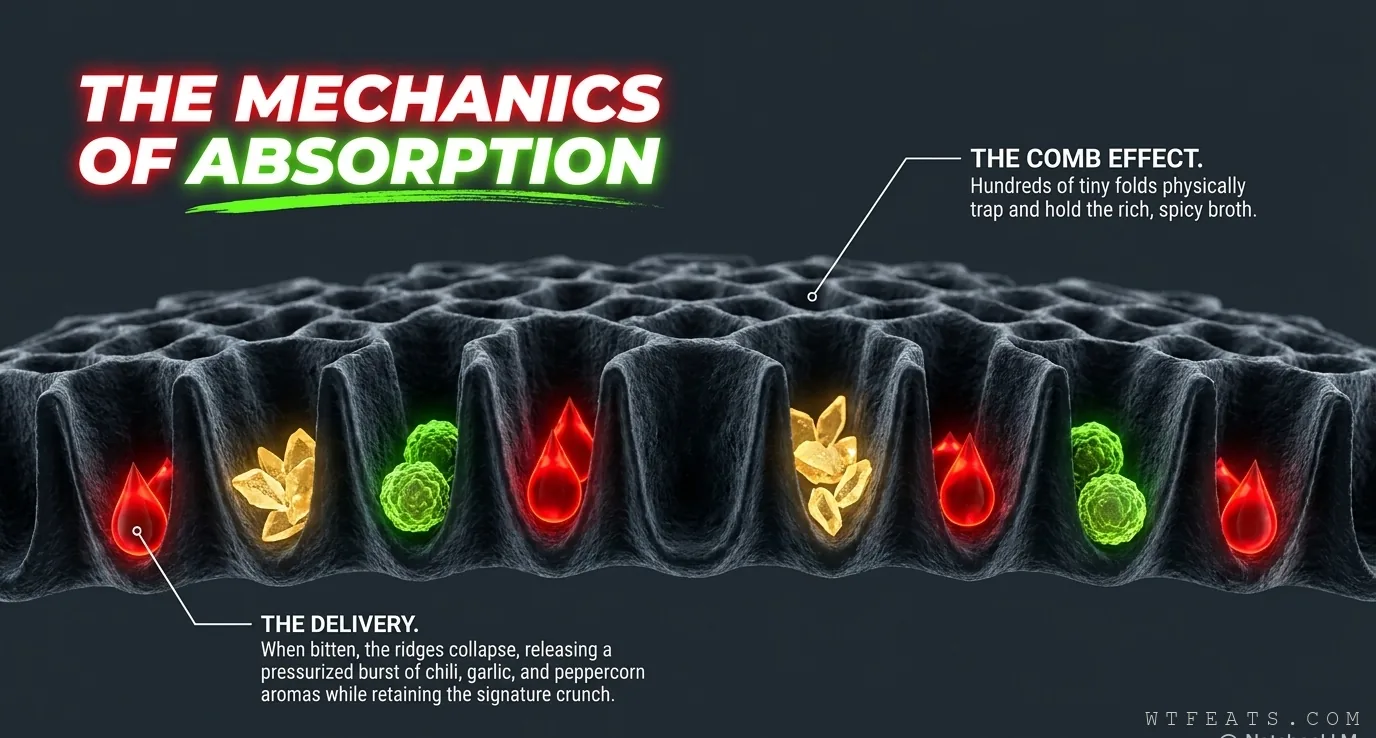
The mechanics of absorption: máo dù's ridged folds holding hot pot broth, the comb effect in cross-section

The comb effect.

Hundreds of tiny folds means hundreds of tiny reservoirs. When máo dù moves through the broth, every ridge traps chili oil, garlic, and Sichuan peppercorn aroma — the mechanics of absorption, working like a comb through liquid. This is how an ingredient with a very mild flavor delivers such a rich bite: it absorbs the rich aromas of the broth while retaining its signature crunch.

The Law
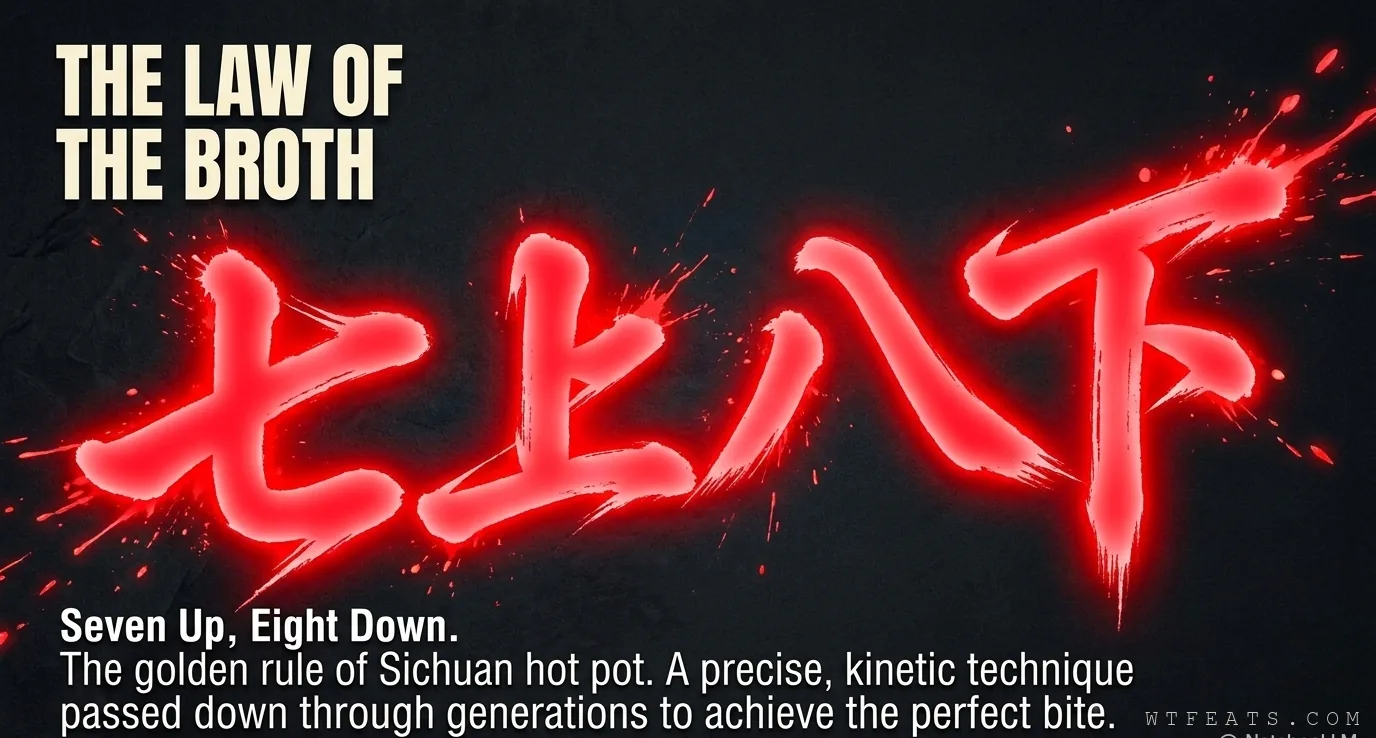
The law of the broth: Seven Up, Eight Down written in bold red Chinese calligraphy

Seven Up, Eight Down.

Every máo dù table runs on one famous Sichuan saying: 七上八下 — Seven Up, Eight Down. Dip the slice into the boiling broth and move it up and down several times, about ten to fifteen seconds in total. This is not a suggestion. It is the law of the broth, and experienced diners proudly demonstrate the ideal technique at the table.

The Execution
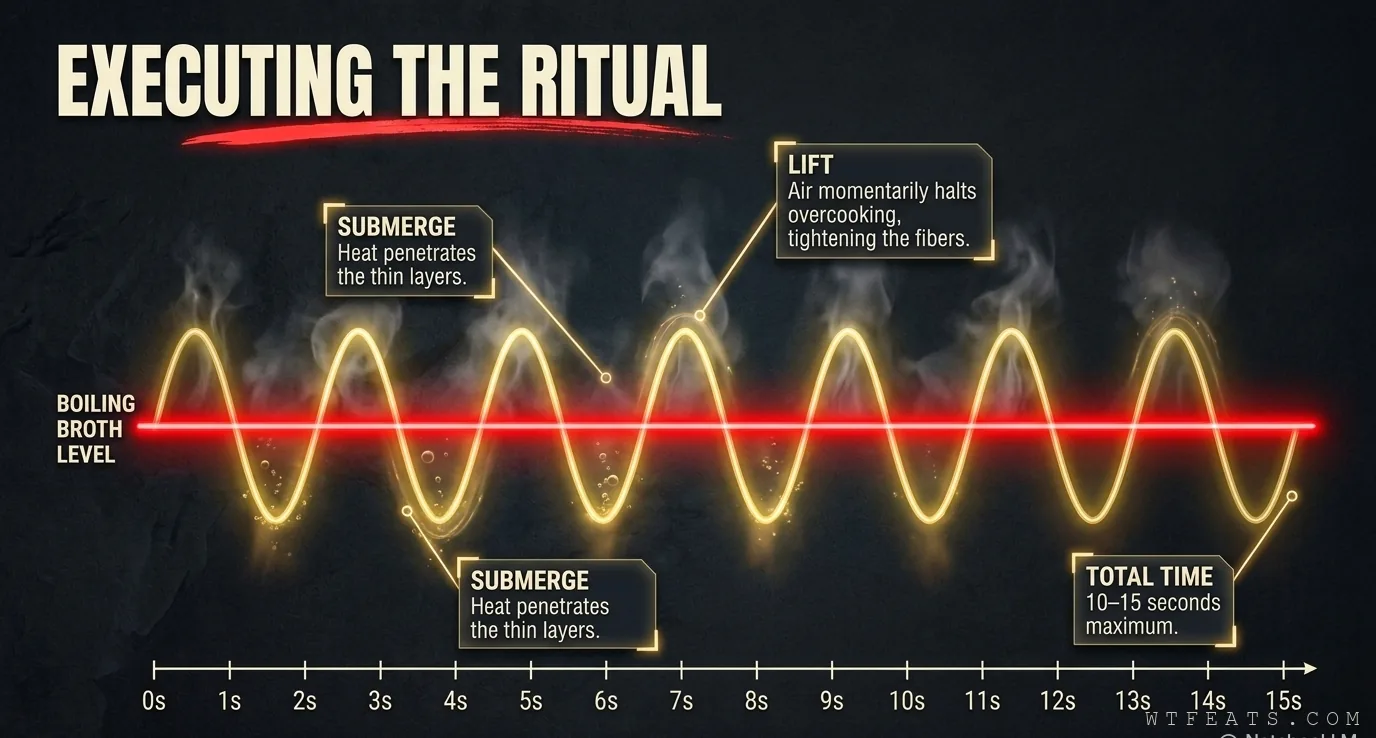
Executing the ritual: a waveform diagram of dipping máo dù up and down in boiling broth for ten to fifteen seconds

Ten to fifteen seconds of attention.

The ritual in motion: chopsticks gripping a single sheet, in and out of the rolling broth in a steady rhythm. The up-and-down movement keeps the heat even across the folds — no pocket of the slice overcooks while another stays raw. Total immersion time: about ten to fifteen seconds. It cooks in less than twenty seconds, and every second is visible to the whole table.

The Timing
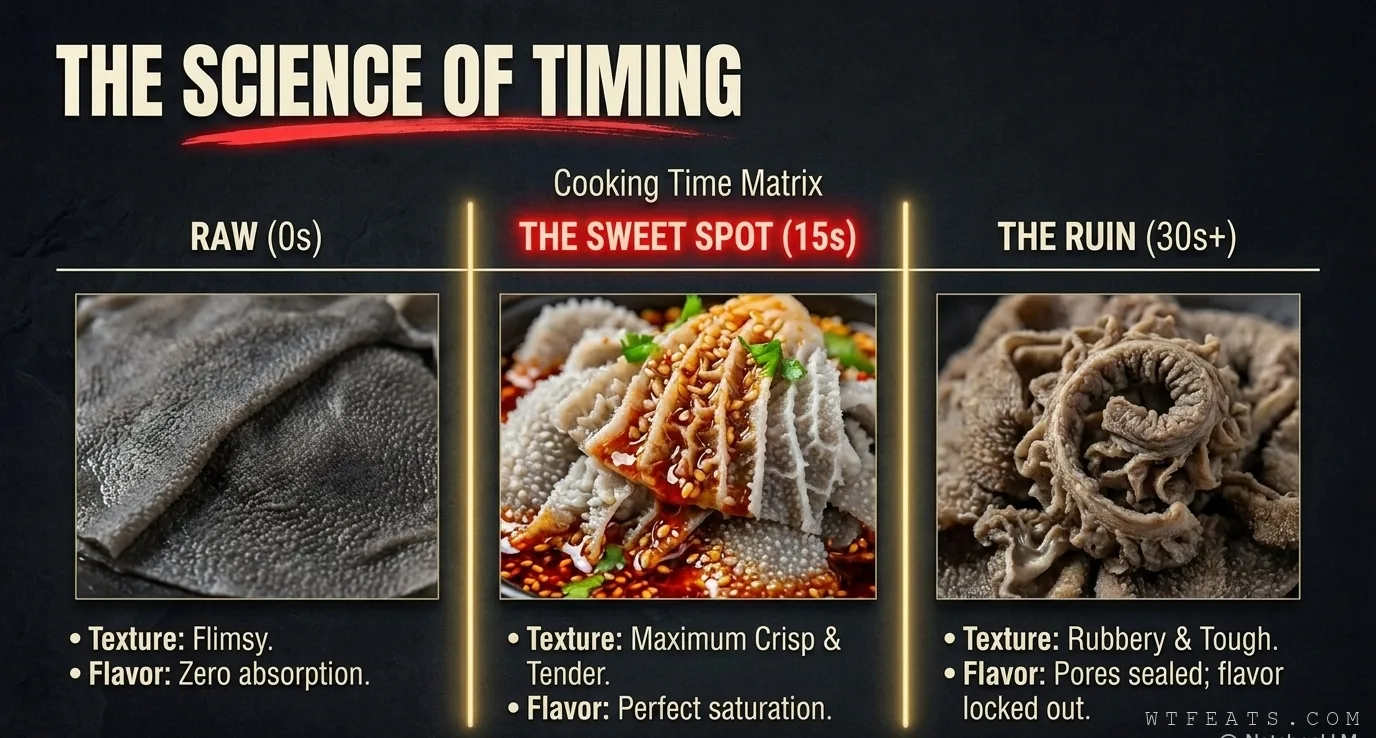
The science of timing: raw at zero seconds, the sweet spot at fifteen seconds, ruin at thirty-plus seconds

Raw, sweet spot, ruin.

The science of timing is brutally simple. At zero seconds: raw — served that way on purpose. At about fifteen seconds: the sweet spot — slightly lighter in color, crisp and tender, still folded. At thirty seconds and beyond: ruin — overcooking makes it tough, and the famous crunch is gone for good. Many hot pot lovers believe perfectly cooked máo dù should be crisp but never rubbery. The clock decides which one you get.

Crisp is everything. Rubbery is ruin.

The Catalyst
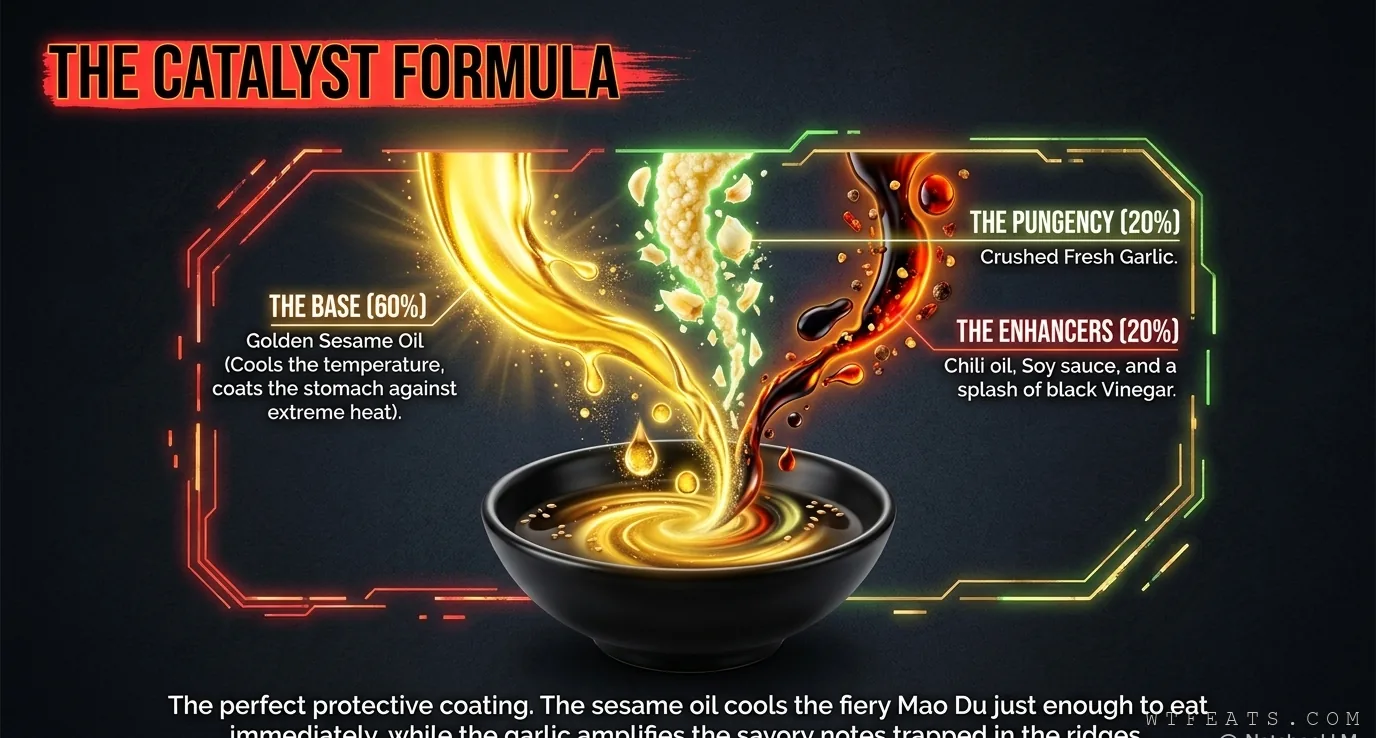
The catalyst formula: a dipping sauce of roughly sixty percent sesame oil, twenty percent garlic, and twenty percent enhancers like chili oil, soy sauce, and vinegar

The catalyst formula.

Straight from the pot, máo dù lands in the dip — the catalyst that finishes the bite. The classic formula: a base of sesame oil, a strong hit of garlic, and enhancers to taste — chili oil, soy sauce, vinegar. The oil cools the scalding slice on contact, the garlic cuts through the richness, and the crunch survives the whole transaction.

The Culture & The Alchemy

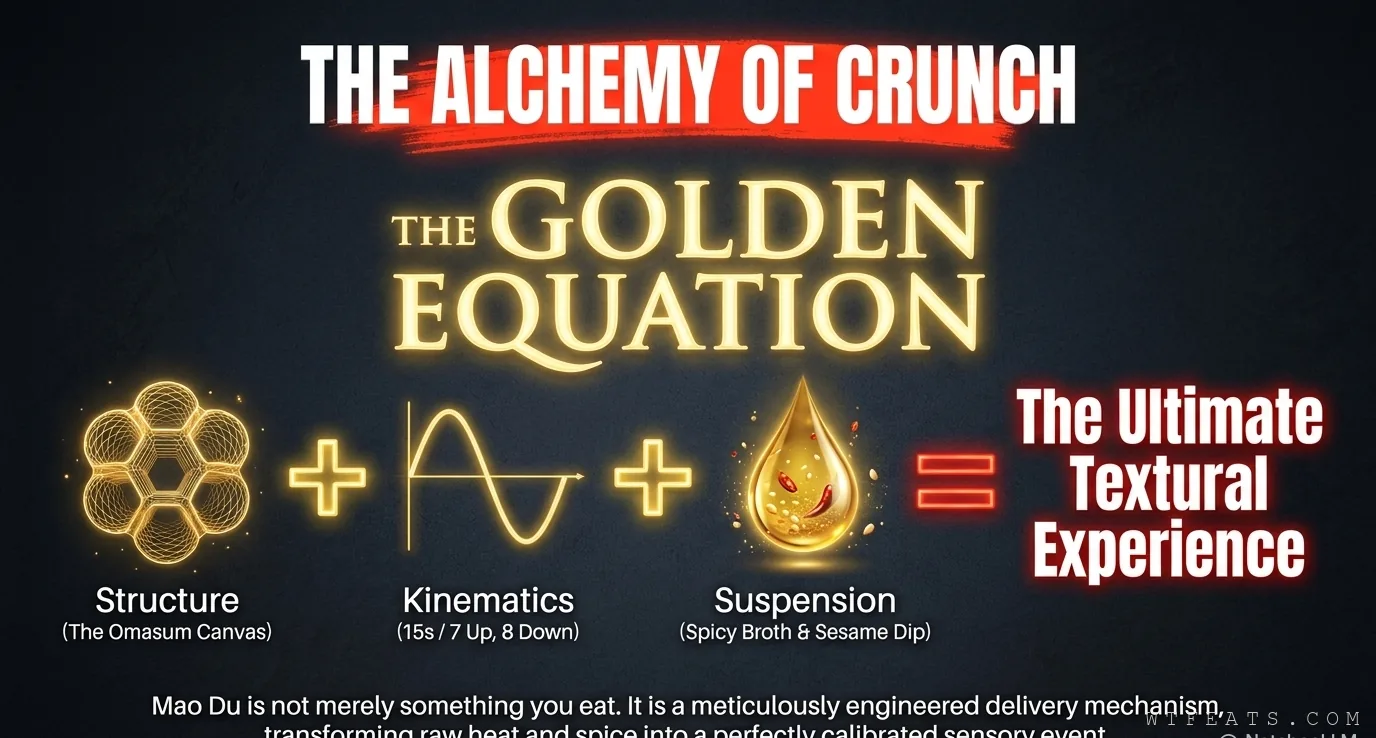
Structure + motion + broth = crunch.

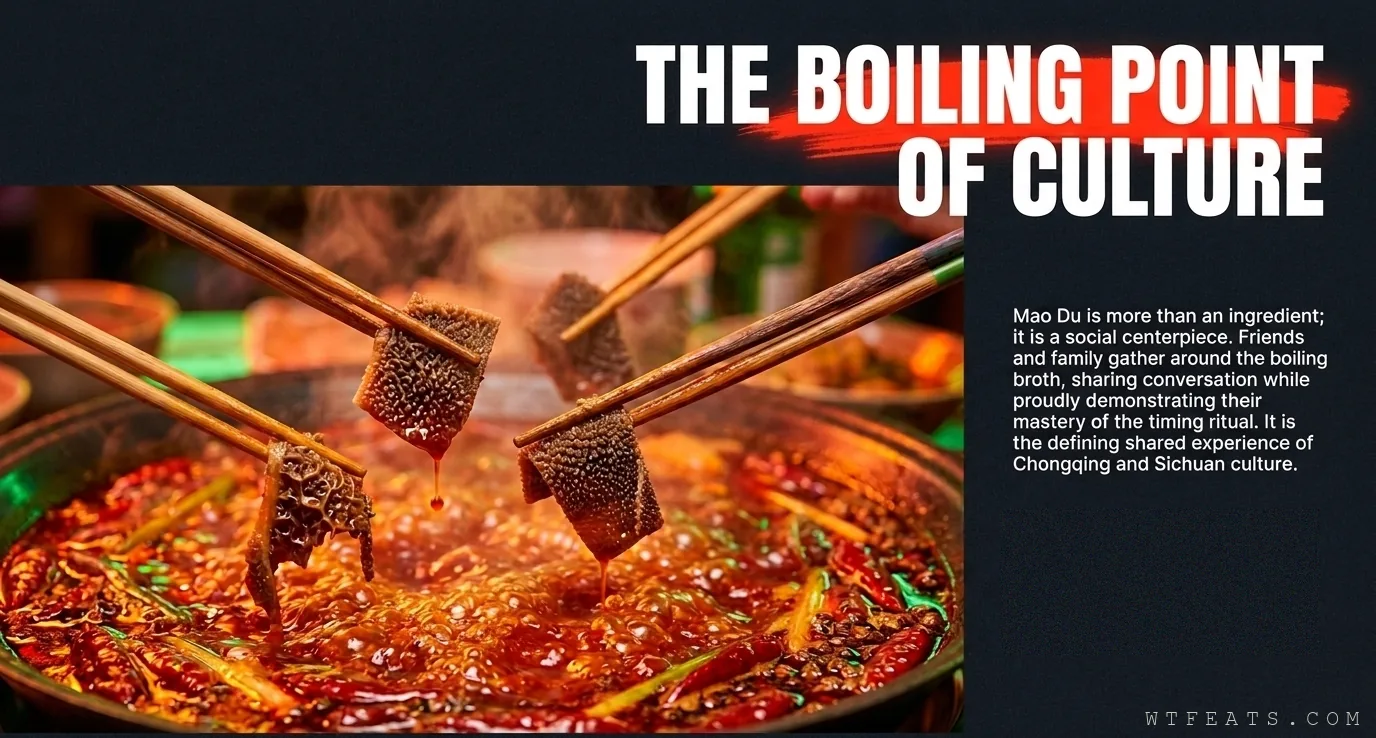
Máo dù has become one of the defining ingredients of Sichuan and Chongqing hot pot culture: friends and family gathered around a bubbling pot, cooking together, sharing conversation. The alchemy is a three-part equation — the layered structure of the omasum, the kinematics of the up-and-down dip, and the suspension of broth in the folds. Get all three right and you get the ultimate textural experience. Timing máo dù perfectly is considered part of the hot pot experience itself.

The Verdict
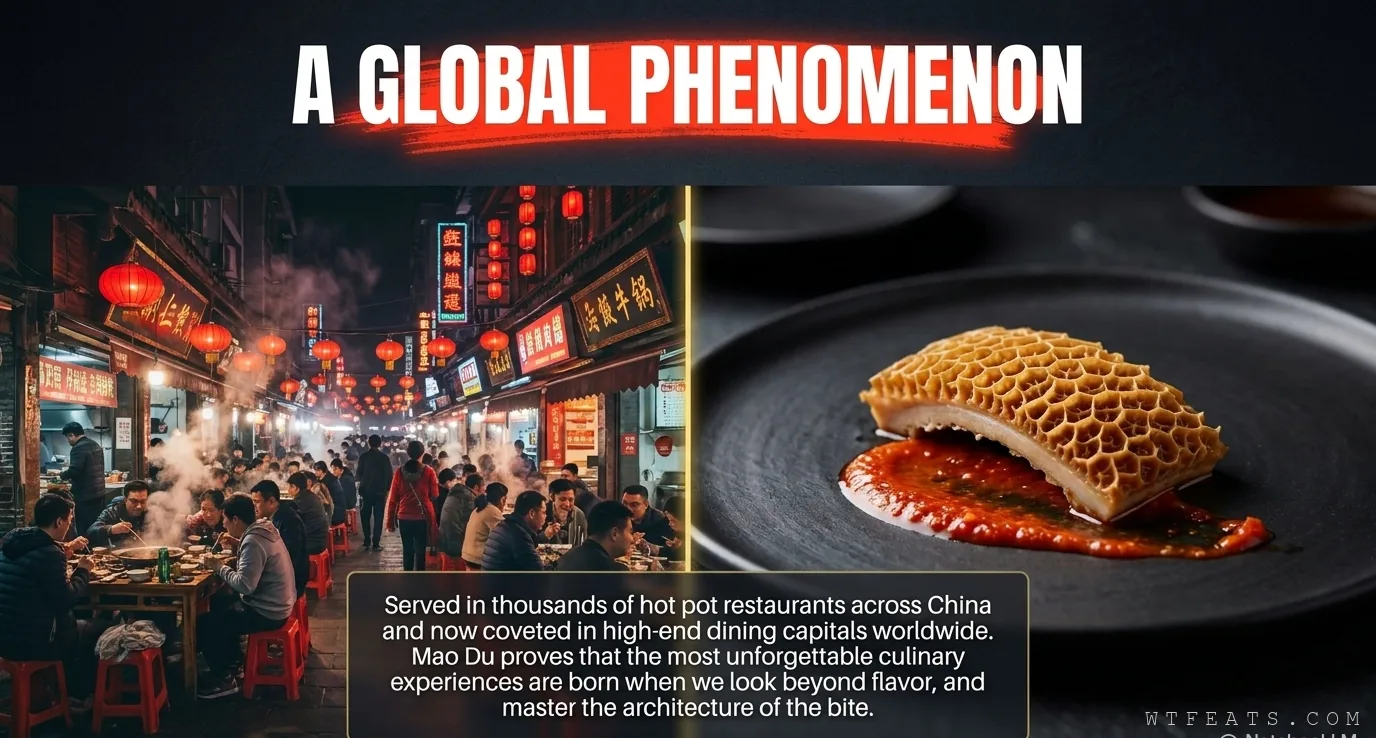
A global phenomenon: a bustling Chinese hot pot street scene and an elegant máo dù plating

A global phenomenon.

"Today, máo dù is served in thousands of hot pot restaurants across China and has become increasingly popular in Chinese restaurants around the world. A cow's third stomach — mild, dark, folded like a honeycomb — turned into the ingredient that audits everyone's chopstick skills. The broth is boiling. The clock is running. Seven up, eight down."

Read the full craft