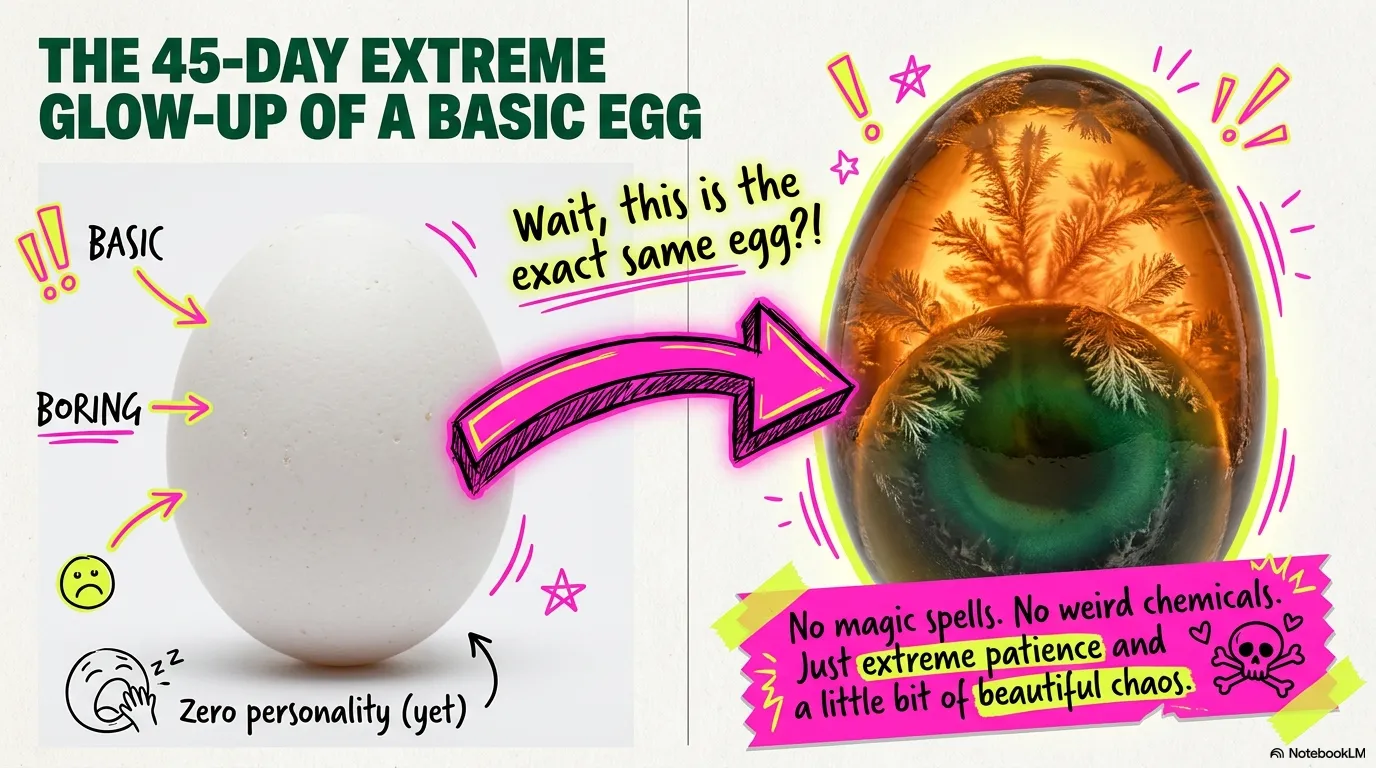
The most common mistake is calling century egg rotten. Rotting is uncontrolled breakdown by microbes. Century egg is closer to preservation and transformation: high pH, salt, minerals, proteins, fats, and time all pushing the egg into a new stable state.
The result can seem impossible if you only know boiled eggs. The white becomes translucent and springy. The yolk becomes dark, dense, creamy, and savory. Nothing about it looks normal, which is exactly why it needs a proper explanation.
1. Alkaline curing changes the rules
A fresh egg starts close to neutral pH. The curing environment is strongly alkaline, traditionally made with ingredients such as clay, wood ash, salt, lime, and tea. Alkaline compounds slowly move through the shell's tiny pores and raise the pH inside the egg.
That pH shift is the switch. Proteins that once kept the raw egg white thick and gloopy begin to unfold. The familiar structure of a fresh egg starts coming apart, but not in a random way.
2. The white liquefies, then gels
At first, the egg white can become more fluid as protein structures loosen. Then the same harsh environment encourages those proteins to reconnect in a new network. Water gets trapped inside that network, forming the bouncy amber gel that makes century egg so visually strange.
This is why the finished white is not chalky like hard-boiled egg white. It is cool, elastic, and translucent, closer to a savory jelly than anything most Western eaters expect from an egg.
3. The color comes from slow browning
The amber and brown tones are partly built by slow reactions between amino acids and reducing sugars. It is related to the Maillard reaction that makes toast, roasted meat, and soy sauce taste complex, but here it happens slowly at room temperature over many days.
The yolk also changes. Sulfur compounds and iron contribute to the dark green and gray tones around the yolk. Fats and proteins break down into a richer, saltier, more savory center.
Century egg is shocking because it looks like decay. It is fascinating because the process is controlled enough to make the same strange beauty again and again.
4. Pine flowers are tiny crystal patterns
High-quality century eggs sometimes show delicate fern-like or pine-branch patterns in the gel. These are called pine flowers. They form when minerals migrate and crystallize inside the gel matrix.
For a first-time eater, the pattern can look suspicious. For fans, it is a sign of craft: the egg did not just turn dark, it developed structure.
5. Maturation makes it edible, not just weird
In the later stage, the egg stabilizes. The sharp alkaline smell softens. The gel becomes clearer and firmer. The yolk settles into a rich paste, sometimes with a molten center prized in Chinese as tangxin.
A good century egg should taste savory, mineral, and creamy. If it tastes aggressively harsh, sour, or rotten, that is not the point of the food. That is a bad egg or a bad introduction.
How to try it without panicking
Start with century egg tofu or century egg congee. Tofu gives it a clean, cool base; congee makes the flavor softer and rounder. Ginger, black vinegar, soy sauce, sesame oil, and scallions are not decoration. They are the bridge between the egg's intensity and the rest of the dish.
- Total transformation: usually around 30 to 45 days.
- Main force: alkaline curing, not age.
- Signature texture: amber gel white and creamy dark yolk.
- Best beginner dish: century egg tofu.