It is rotten.
Rotting is uncontrolled microbial breakdown. Century egg curing is alkaline preservation.
No. 001 / Misunderstood Chinese Food
Yes. The century egg looks like a forbidden gemstone, smells a little dangerous, and tastes like savory egg custard with deep umami. It is not rotten. It is not buried for 100 years. It is controlled chemistry.

Most commercial century eggs cure in roughly 30 to 45 days.
High alkalinity transforms proteins and fats instead of letting microbes take over.
The classic mix is alkaline clay, ash, salt, tea, and time.
What Is It?
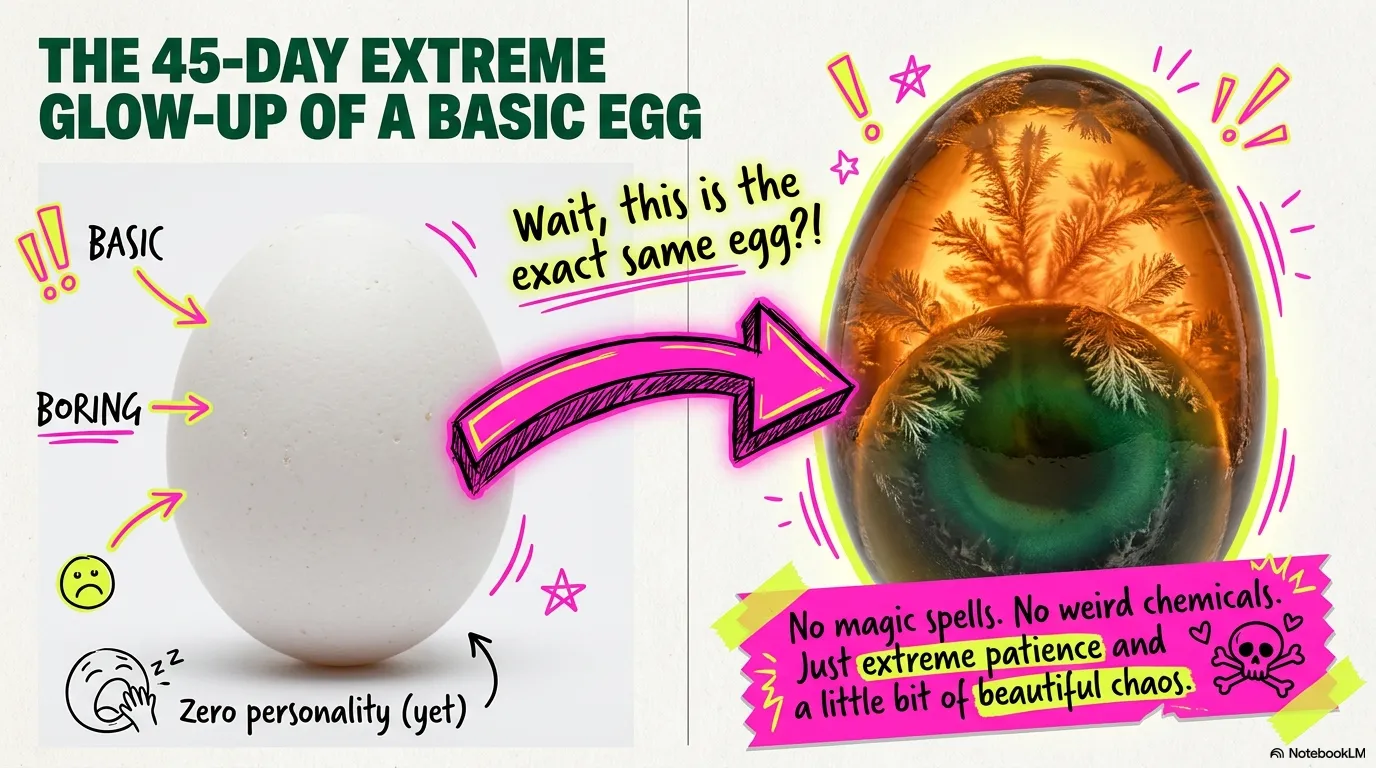
A century egg, or pidan, is usually a duck egg cured in a strongly alkaline environment. The shell stays intact, but the inside changes completely: the white becomes a translucent amber gel, and the yolk turns dark green, creamy, salty, and deeply savory.
For people meeting it for the first time, the appearance is the whole shock. For people who grew up with it, the appeal is texture: cool jelly, rich yolk, sharp sauce, and a finish that lands somewhere between egg, aged cheese, and soy-sauce umami.
First Reaction
The white is not cooked. It becomes a gel through alkaline protein changes. The brown color comes from slow reactions between sugars and amino acids. The delicate patterns are mineral crystals growing inside the gel.

Myth vs Fact
Rotting is uncontrolled microbial breakdown. Century egg curing is alkaline preservation.
Protein structure, pH, ions, and time reshape the egg into a new texture.
The name is dramatic. The process is measured in weeks, not generations.
A good century egg tastes savory, creamy, and mineral, with only a light alkaline edge.
Visual Story
Follow the transformation from plain duck egg to amber gel, green yolk, and pine-flower crystals.
Open the timelineDeep Dive
Alkaline hydrolysis, gelation, Maillard browning, and why it is not decay.
Read the articleGuide
A tidy table of contents for the overview, timeline, science, and eating guide.
Browse chaptersHow to Eat It
Cold silken tofu, century egg wedges, soy sauce, black vinegar, sesame oil, scallions. Beginner-friendly and fast.
Rice porridge softens the aroma and lets the yolk melt into the bowl. This is the comfort-food route.
Sharp ginger and vinegar cut through the richness. Best once you already know what the egg tastes like.