Visual Story

Twelve Days Inside the Shell

One fertilized egg. Twenty-one days of potential. Somewhere around day twelve, Nanjing interrupts the countdown — and the result is a snack so beloved it has three names. This is the living pearl, stage by stage: the candling spiderweb, the harvest window, and the umami chemistry that makes the interruption worth it.

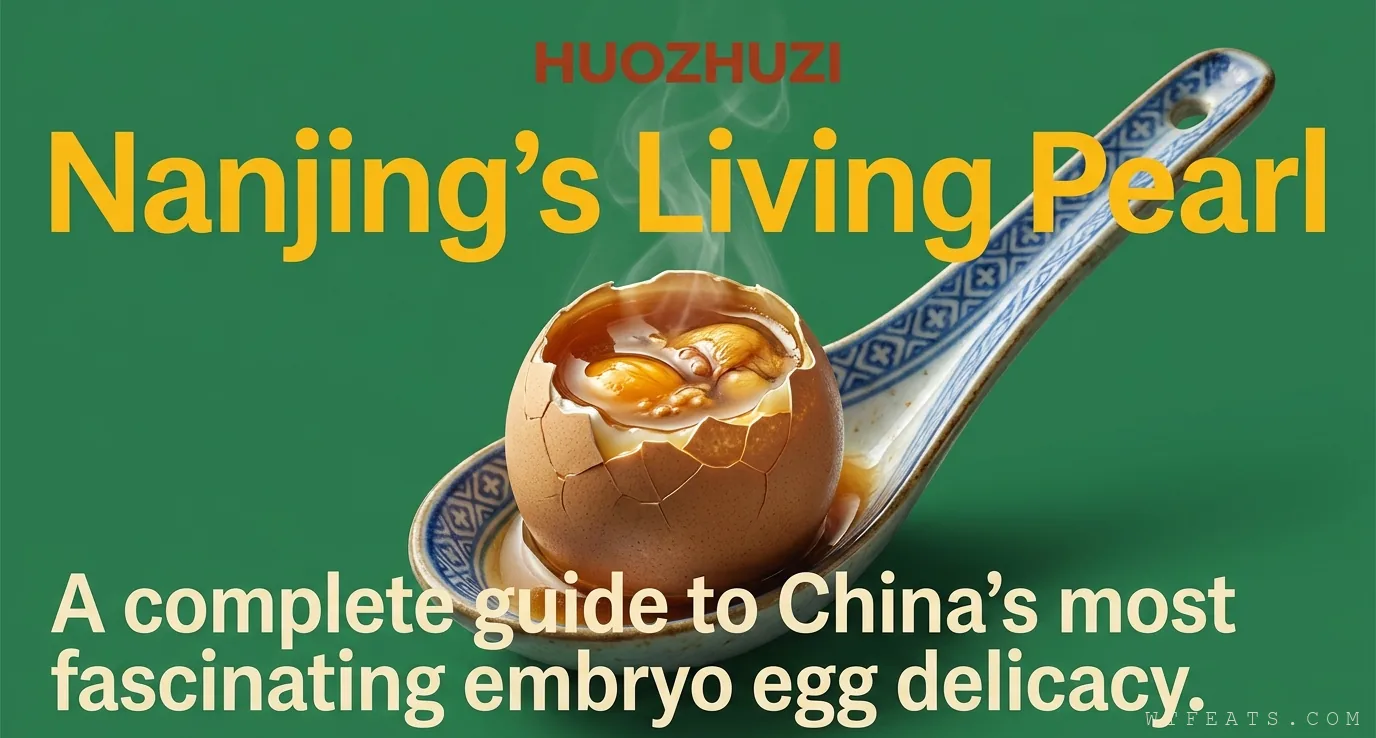
Nanjing's Living Pearl title slide: a cracked huozhuzi egg with visible embryo on a blue-and-white porcelain spoon
The Pearl
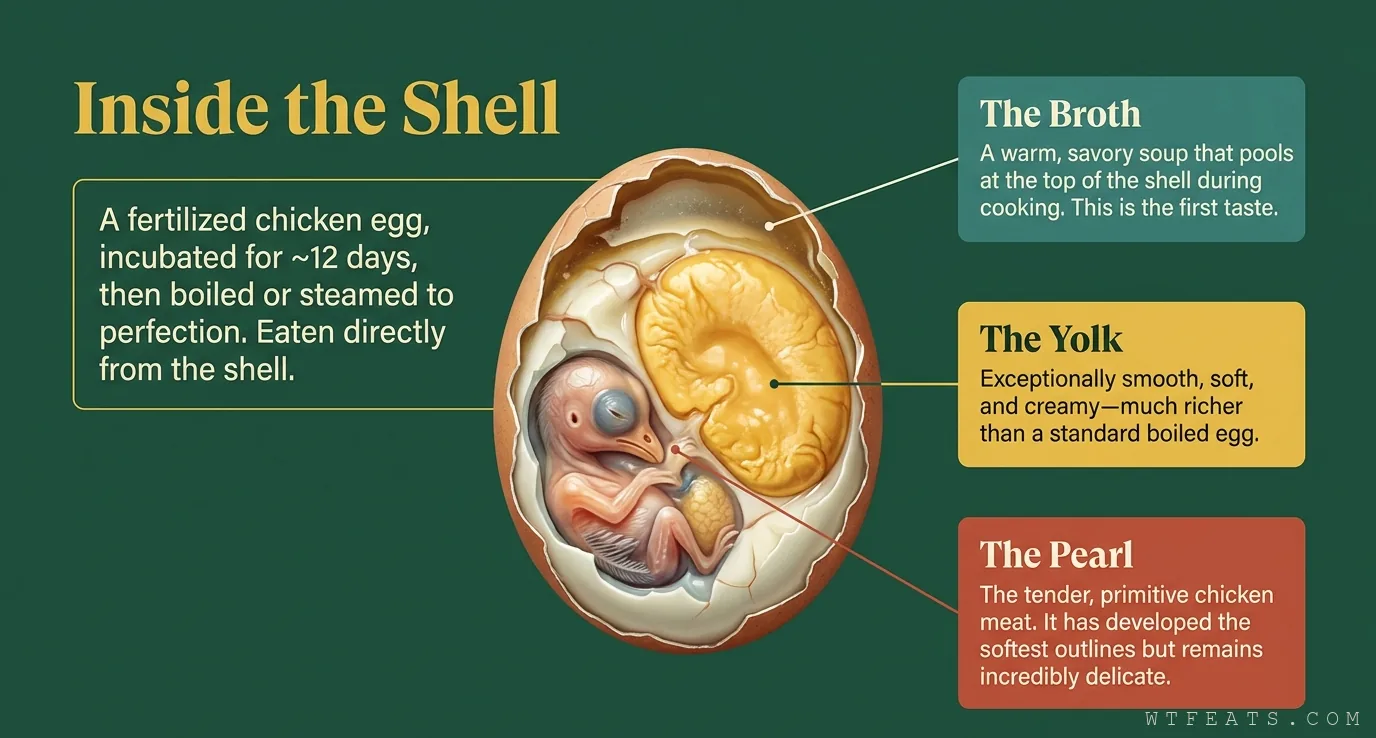
Inside the shell: a cross-section of huozhuzi labeling the broth, the yolk, and the pearl

Three layers, one spoon.

Open a huozhuzi and the shell reveals its contents in order. The Broth: a warm, savory soup pooled at the top. The Yolk: smoother and creamier than any boiled egg. The Pearl: tender primitive chicken — head, wings, and feet just formed, bones still soft enough to eat whole.
Three Names
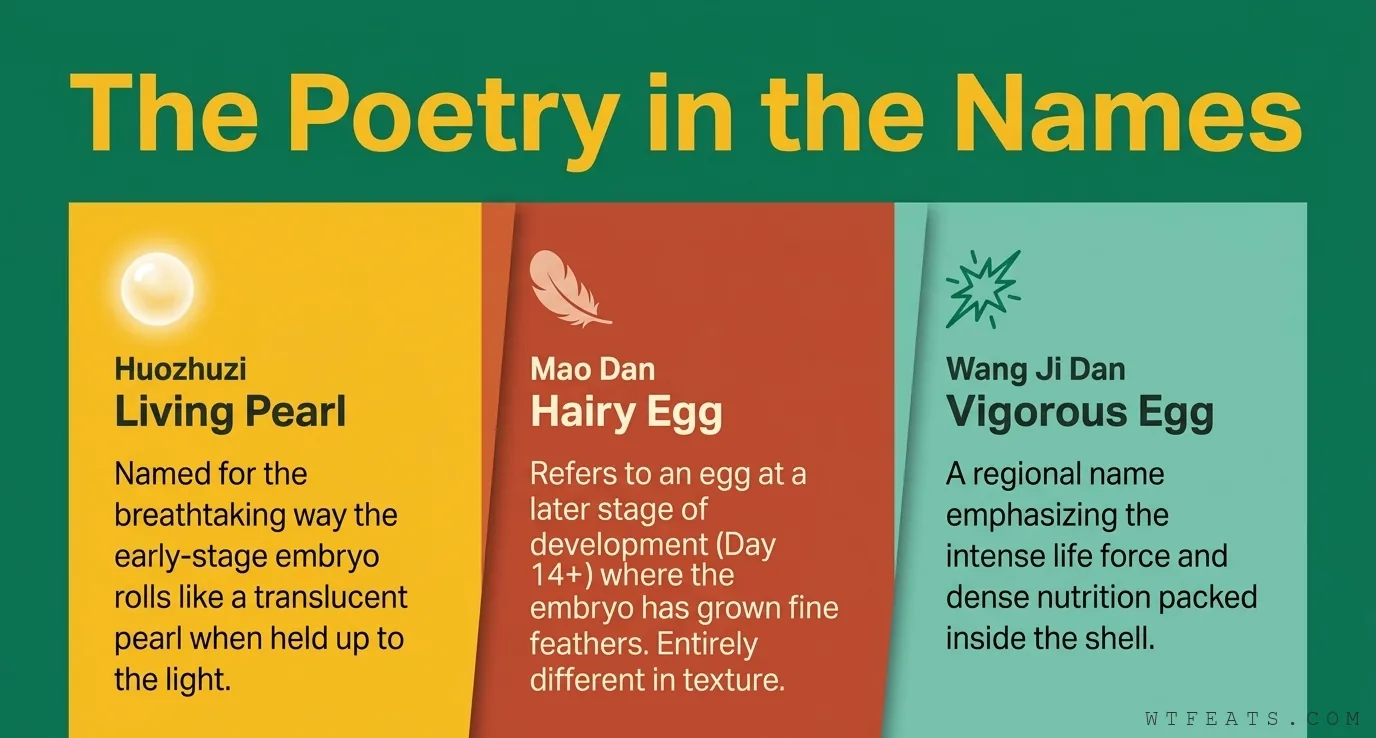
The poetry in the names: huozhuzi the living pearl, mao dan the hairy egg, wang ji dan the vigorous egg

One egg, three destinies.

Huozhuzi (活珠子), the living pearl — named for the way the early embryo rolls like a translucent bead when the egg is held to the light. Mao Dan (毛蛋), the hairy egg — day 14 and beyond, when fine feathers appear. Wang Ji Dan (旺鸡蛋), the vigorous egg — a regional name celebrating life force and nutrition.

Same egg. Different day.

The Numbers
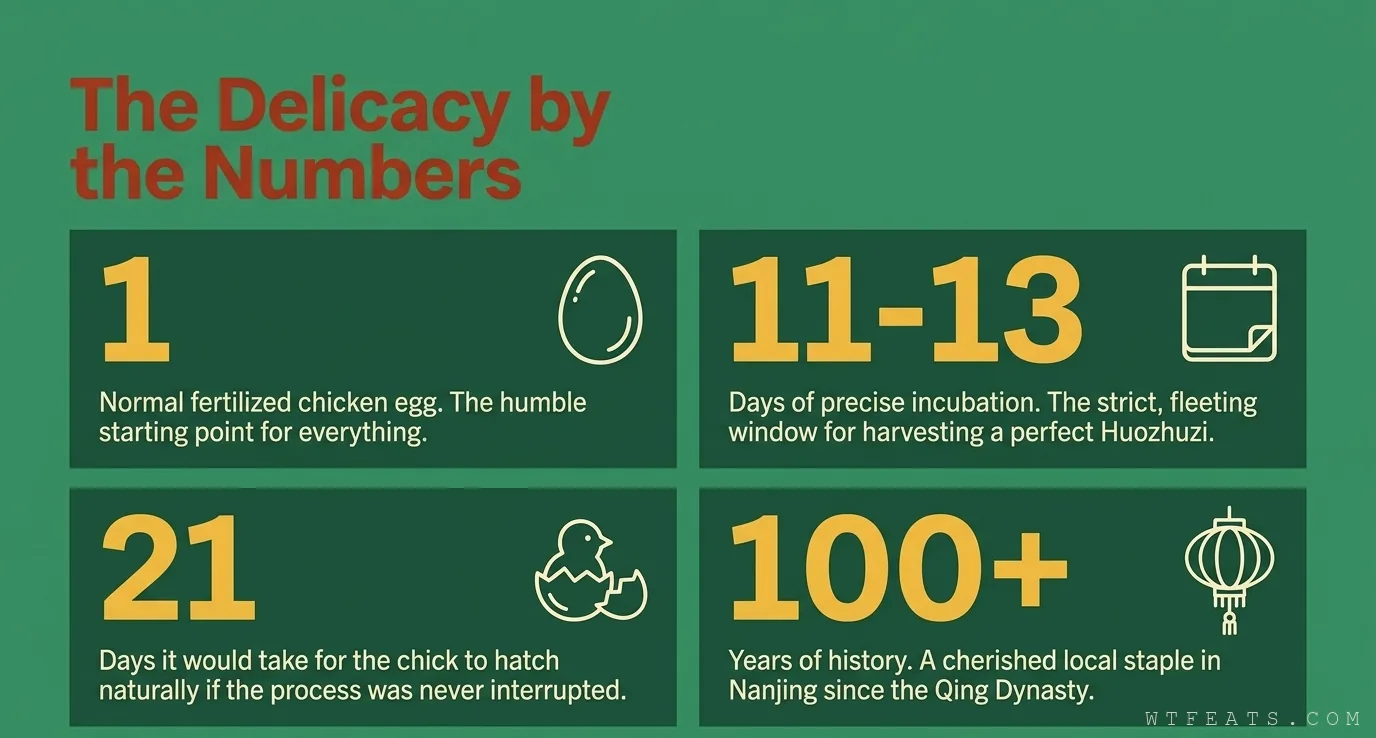
The delicacy by the numbers: 1 egg, 11 to 13 days, 21 days to hatch, over 100 years of history

The delicacy by the numbers.

1 — a normal fertilized egg, where it all starts. 11–13 — the strict harvest window in days. 21 — the days a chick would need to hatch naturally. 100+ — the years huozhuzi has been sold in Nanjing, since the Qing Dynasty.

The Candling
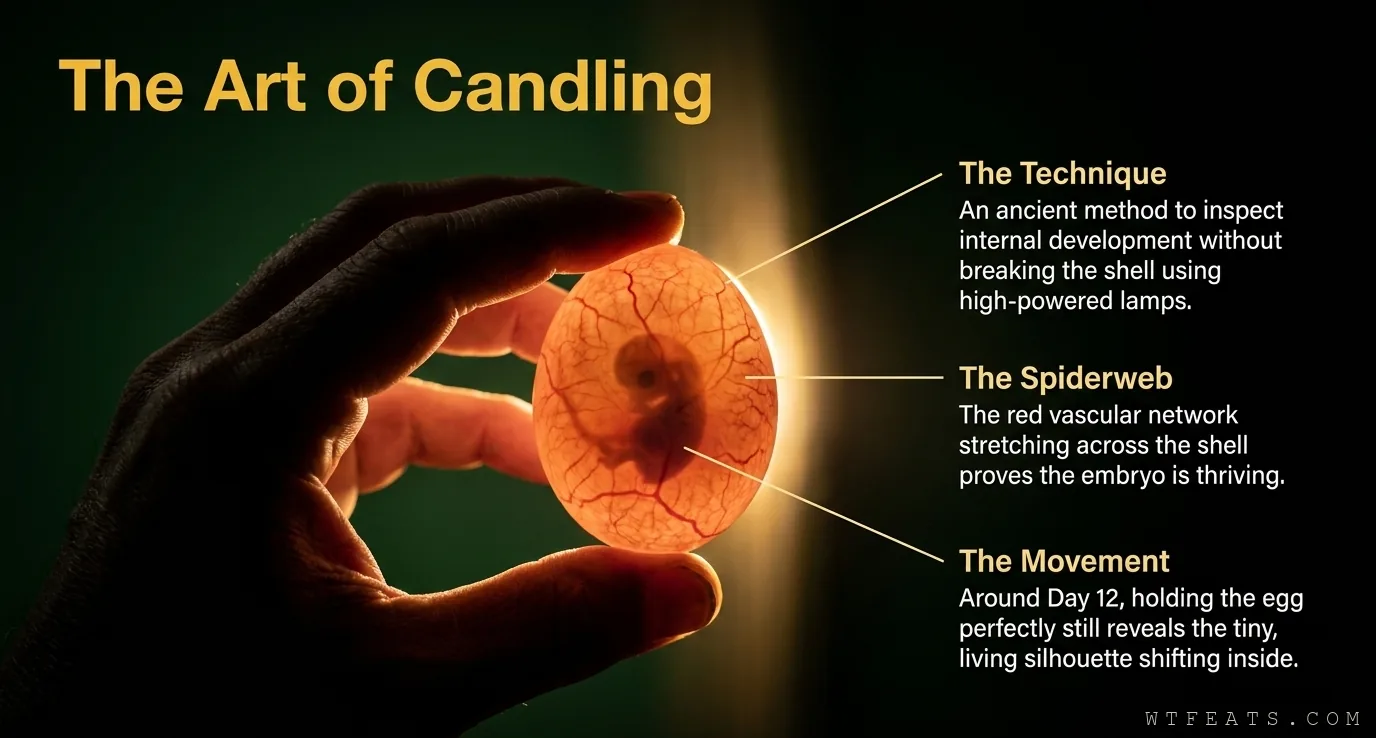
The art of candling: a hand holding a glowing backlit egg showing the red vascular spiderweb and embryo silhouette

The art of candling.

In a dark room, the farmer presses the egg against a high-powered lamp — an ancient inspection method named for its original light source: a candle. Through the shell, a red vascular spiderweb stretching across the egg proves the embryo is thriving. Around day 12, hold the egg perfectly still and you can watch the tiny living silhouette shift inside.

This is the moment the egg earns the name "living pearl."

Day by Day
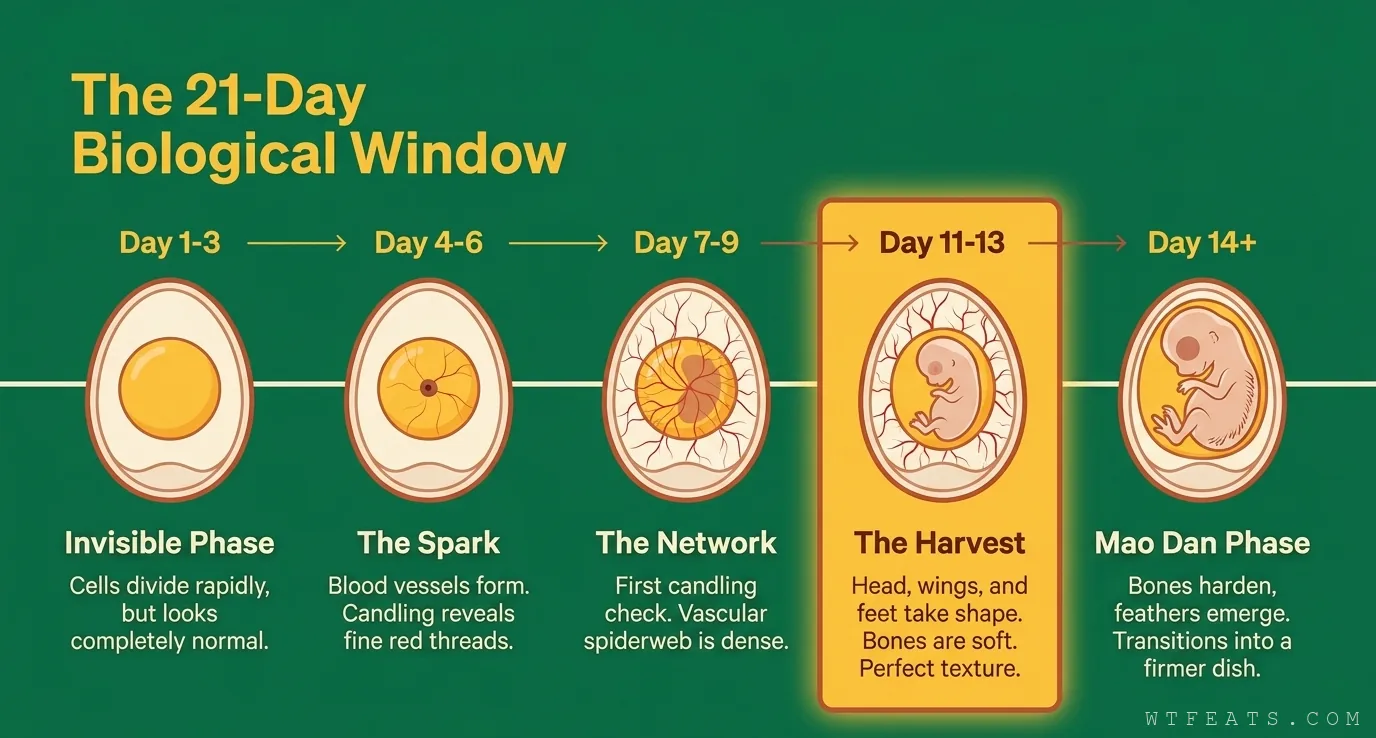
The 21-day biological window: five stages from invisible phase to the day 11-13 harvest to the mao dan phase

The 21-day biological window.

Day 1–3: the invisible phase — the egg looks perfectly ordinary. Day 4–6: the spark — the first blood vessels reach outward from a tiny dark dot. Day 7–9: the network — a dense vascular spiderweb, the first candling checkpoint. Day 11–13: the harvest — head, wings, and feet formed, bones still soft, texture perfect. Day 14+: mao dan territory — bones harden, feathers emerge, and the eating experience changes completely.

Eleven to thirteen days. Not ten. Not fourteen.

The Umami Science
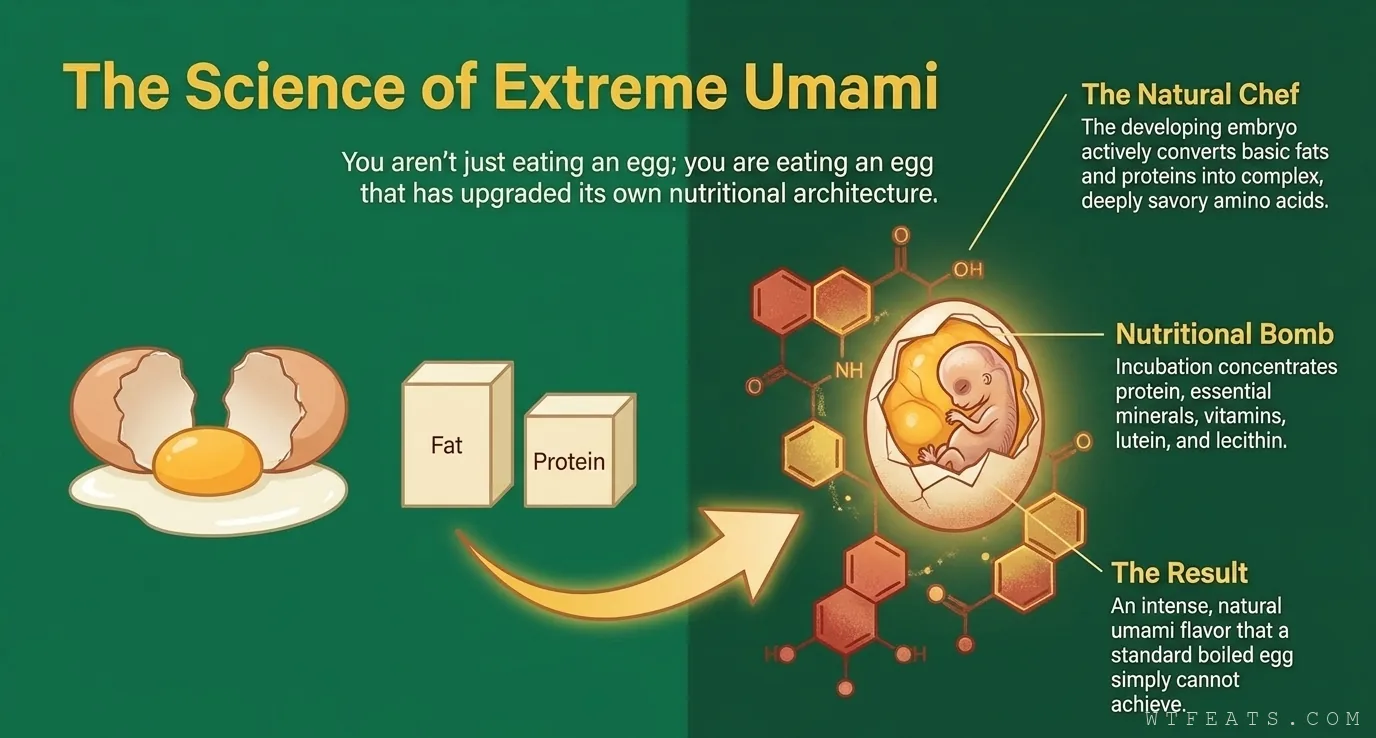
The science of extreme umami: the embryo converting fats and proteins into savory amino acids

The egg that cooks itself.

The embryo is a natural chef. During incubation it breaks the yolk's fats and proteins down and rebuilds them as complex, savory amino acids — which is why huozhuzi delivers an umami a standard boiled egg simply cannot reach. Along the way it concentrates protein, minerals, vitamins, lutein, and lecithin into one small shell.

The Taste
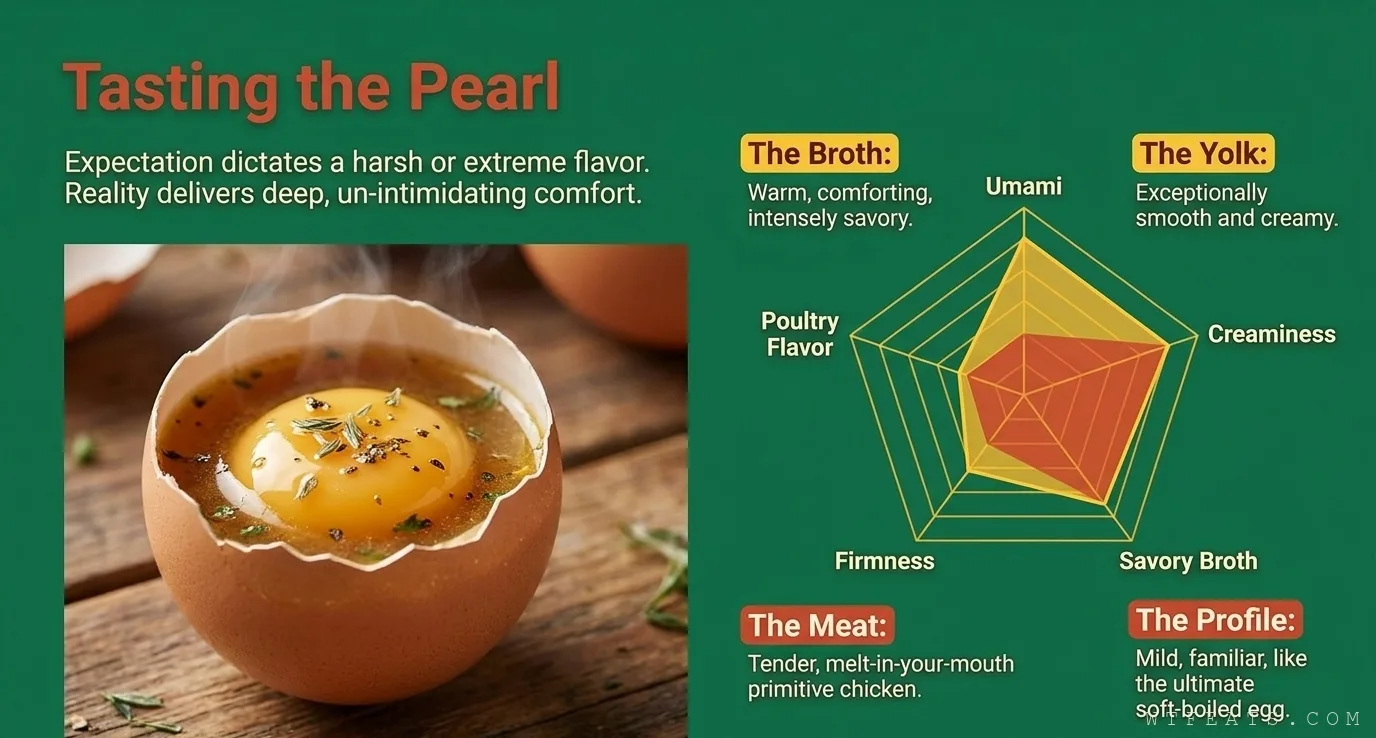
Tasting the pearl: a cooked huozhuzi beside a flavor radar chart scoring umami, creaminess, savory broth, firmness, and poultry flavor

Expectation versus reality.

First-timers brace for something harsh. What arrives is comfort: warm, intensely savory broth; an exceptionally smooth, creamy yolk; meat so tender it melts; and an overall profile that is mild and familiar — the ultimate soft-boiled egg, upgraded.

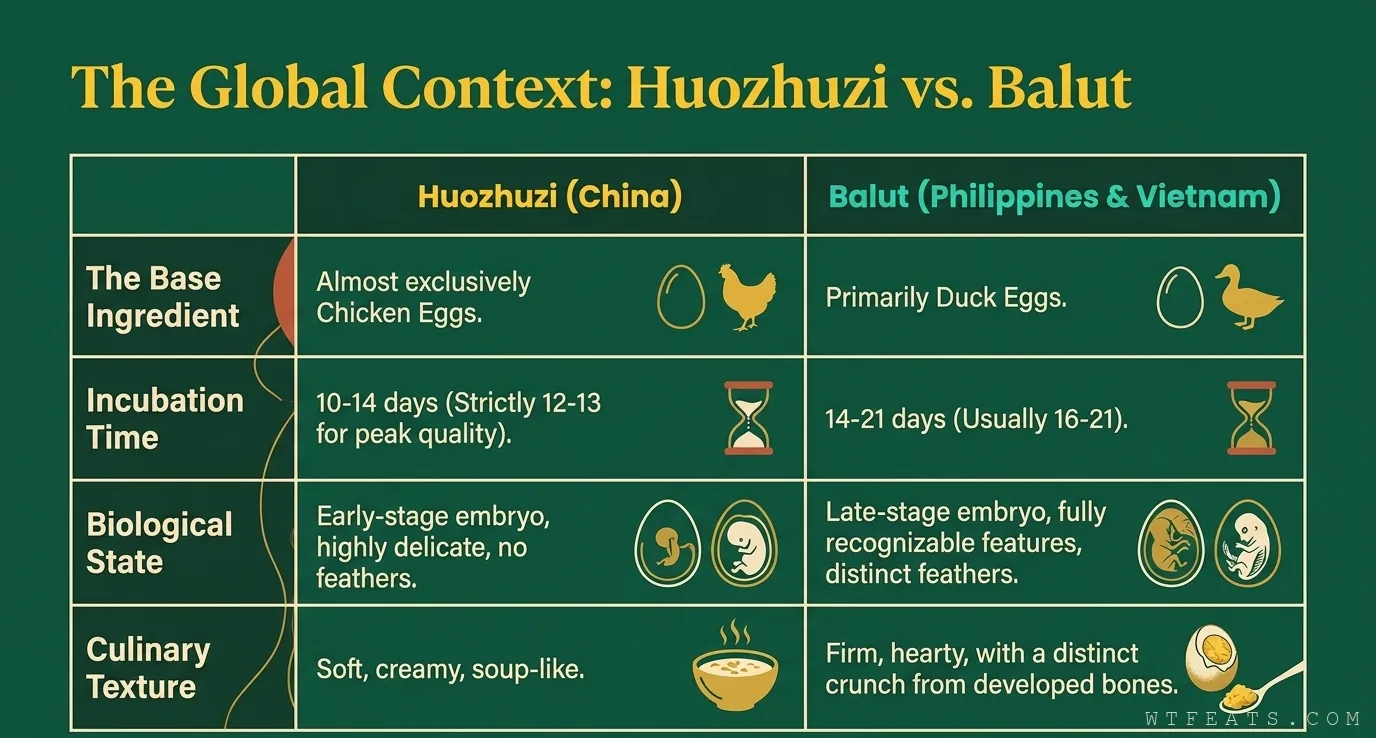
Huozhuzi vs Balut
Huozhuzi versus balut comparison table: chicken versus duck eggs, 12 to 13 versus 16 to 21 days, early versus late embryo, soft versus firm

Same idea, different egg.

Huozhuzi starts with chicken eggs; balut starts with duck. Huozhuzi is harvested at 12–13 days; balut incubates 16–21. So the huozhuzi embryo is early and delicate — no feathers, no crunch — while balut is late-stage and firm, with distinct bones and feathers. Similar in concept, unmistakably different in the mouth.

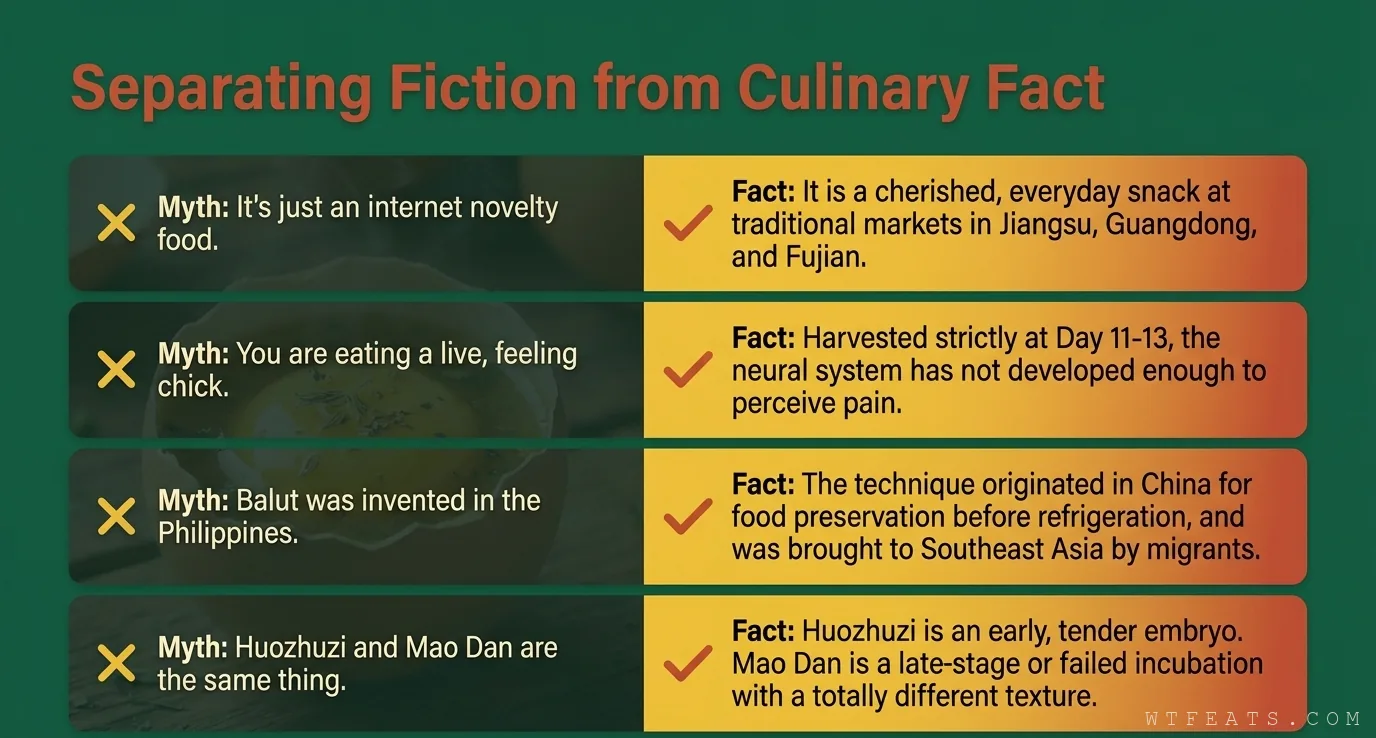
Myth vs Fact
Separating fiction from culinary fact: four myth and fact pairs about huozhuzi

Separating fiction from culinary fact.

It is not an internet novelty — it is an everyday snack in Jiangsu, Guangdong, and Fujian markets. It is not a live, feeling chick — the harvest comes before the nervous system can perceive pain. Balut was not invented in the Philippines — the technique traveled from China with migrants. And huozhuzi is not mao dan — one is an early, tender embryo; the other is a late-stage egg with a completely different texture.

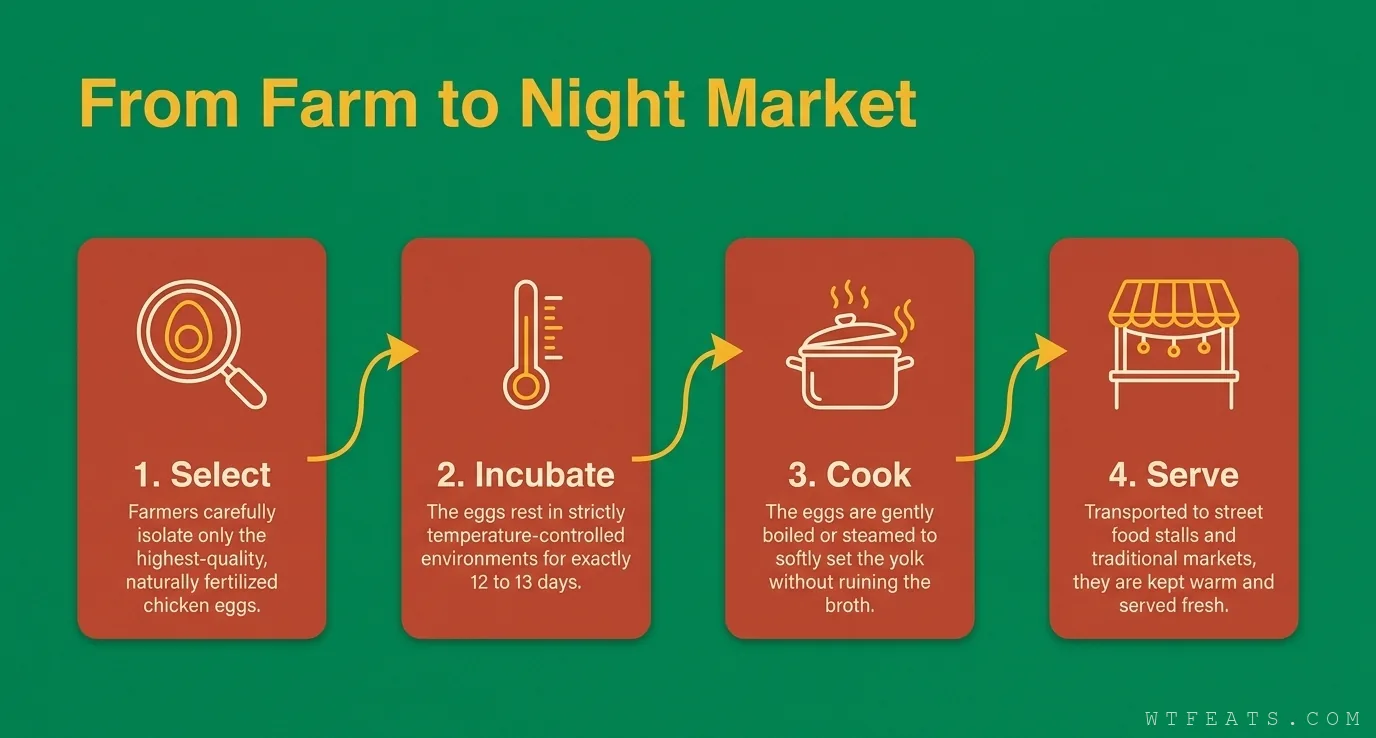
Farm to Night Market
From farm to night market: select, incubate, cook, serve — the four-step huozhuzi supply chain

Four steps, zero accidents.

Select: farmers isolate the highest-quality naturally fertilized eggs. Incubate: strictly temperature-controlled, exactly 12–13 days. Cook: gently boiled or steamed, so the yolk sets softly without ruining the broth. Serve: kept warm at street stalls and traditional markets, sold fresh the same day.

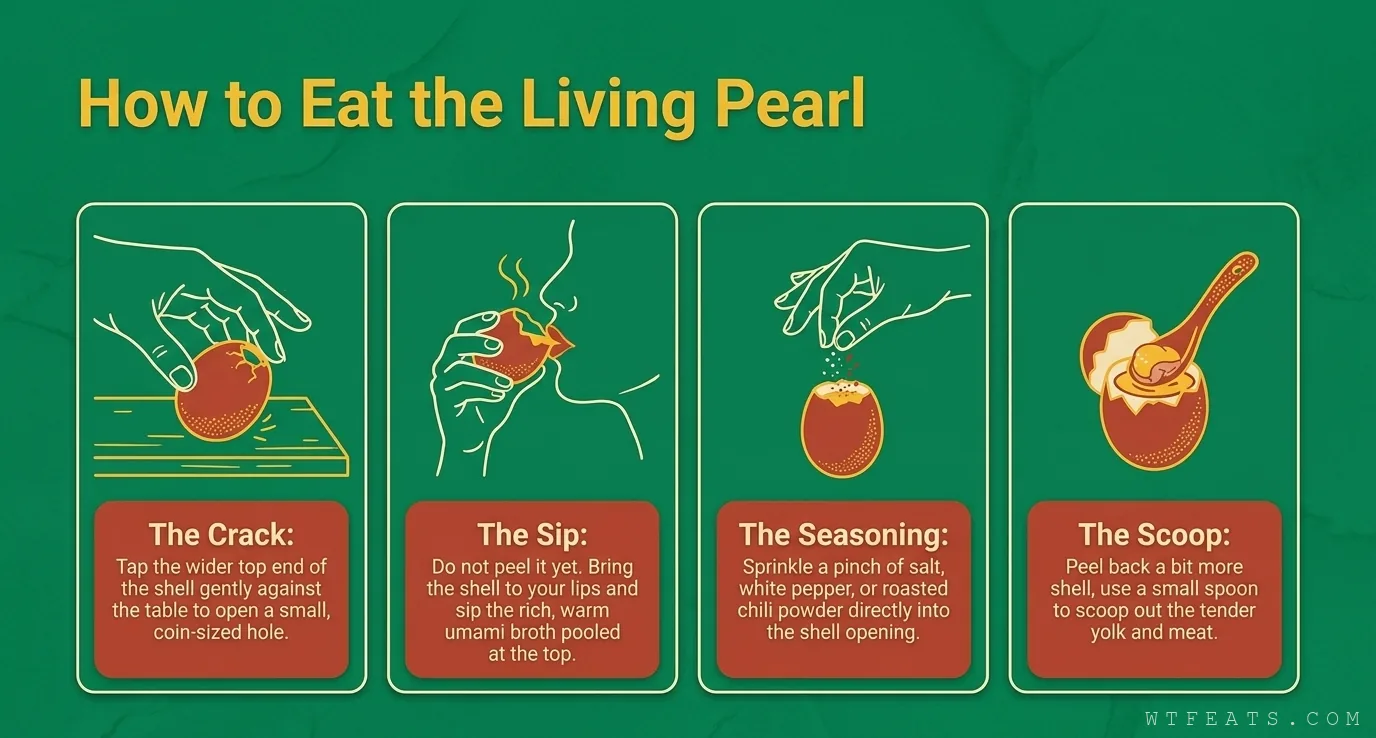
How to Eat It
How to eat the living pearl: the crack, the sip, the seasoning, the scoop

Crack. Sip. Season. Scoop.

The Crack: tap the wider end on the table for a coin-sized hole. The Sip: do not peel — sip the warm umami broth pooled at the top. The Seasoning: a pinch of salt, white pepper, or roasted chili powder into the opening. The Scoop: peel back more shell and spoon out the tender yolk and pearl.

The Legacy

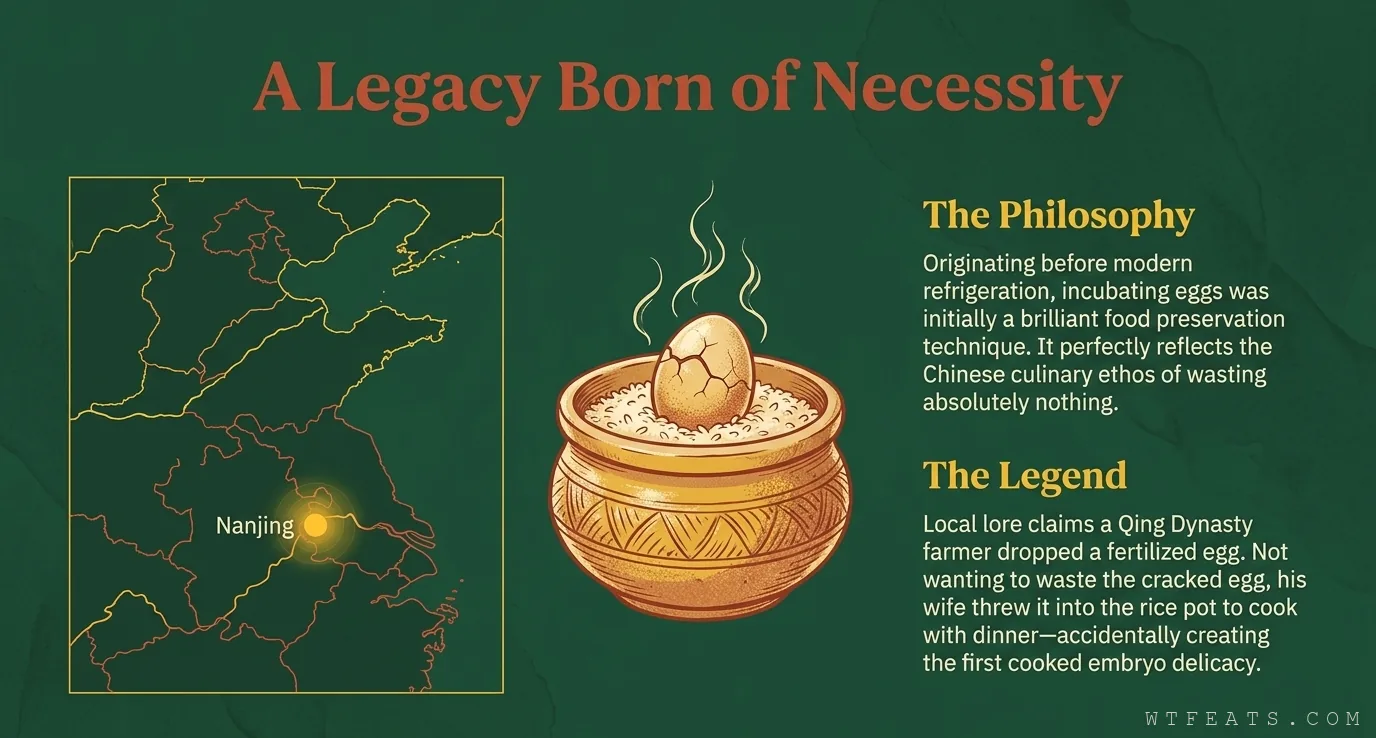
A legacy born of necessity.

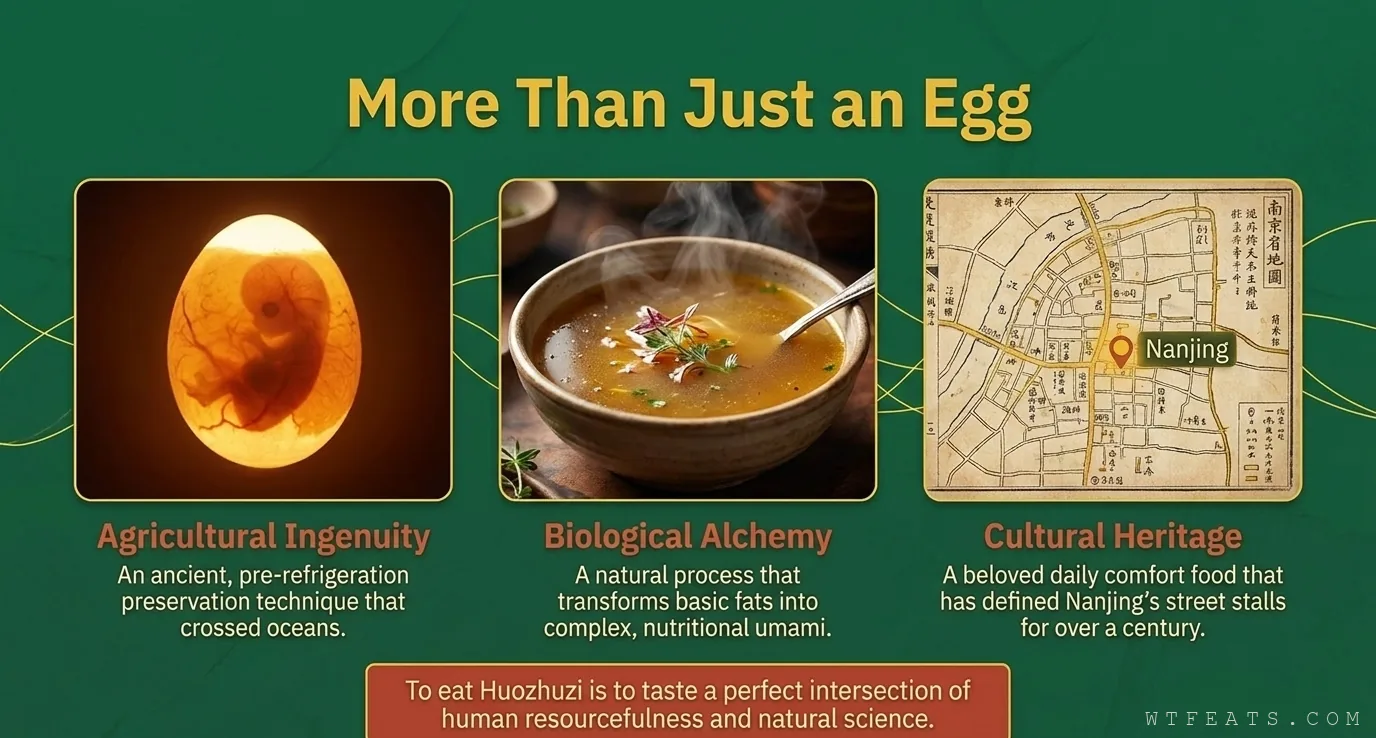
Before refrigeration, incubating fertilized eggs was a preservation technique — an ethos of wasting nothing. The legend: a Qing Dynasty farmer dropped a partially incubated egg on his way home; unwilling to waste it, his wife cooked it in the rice pot — and accidentally created a delicacy. To eat huozhuzi today is to taste a perfect intersection of human resourcefulness and natural science.

The Final Word
Hungry for more culinary discoveries: the wtfeats.com outro slide

Hold it to the light. Then take a sip.

A century ago Nanjing looked at an ordinary fertilized egg and saw a pearl. The candling lamp still glows, the night markets still keep the pots warm, and the first sip of broth still converts skeptics one shell at a time. And if you like your eggs transformed by time and chemistry, our Century Egg chapter runs the same experiment in slow motion. Different method. Same patience.

Read the full craft