Visual Story

The Phoenix Claw: From Trash to Treasure

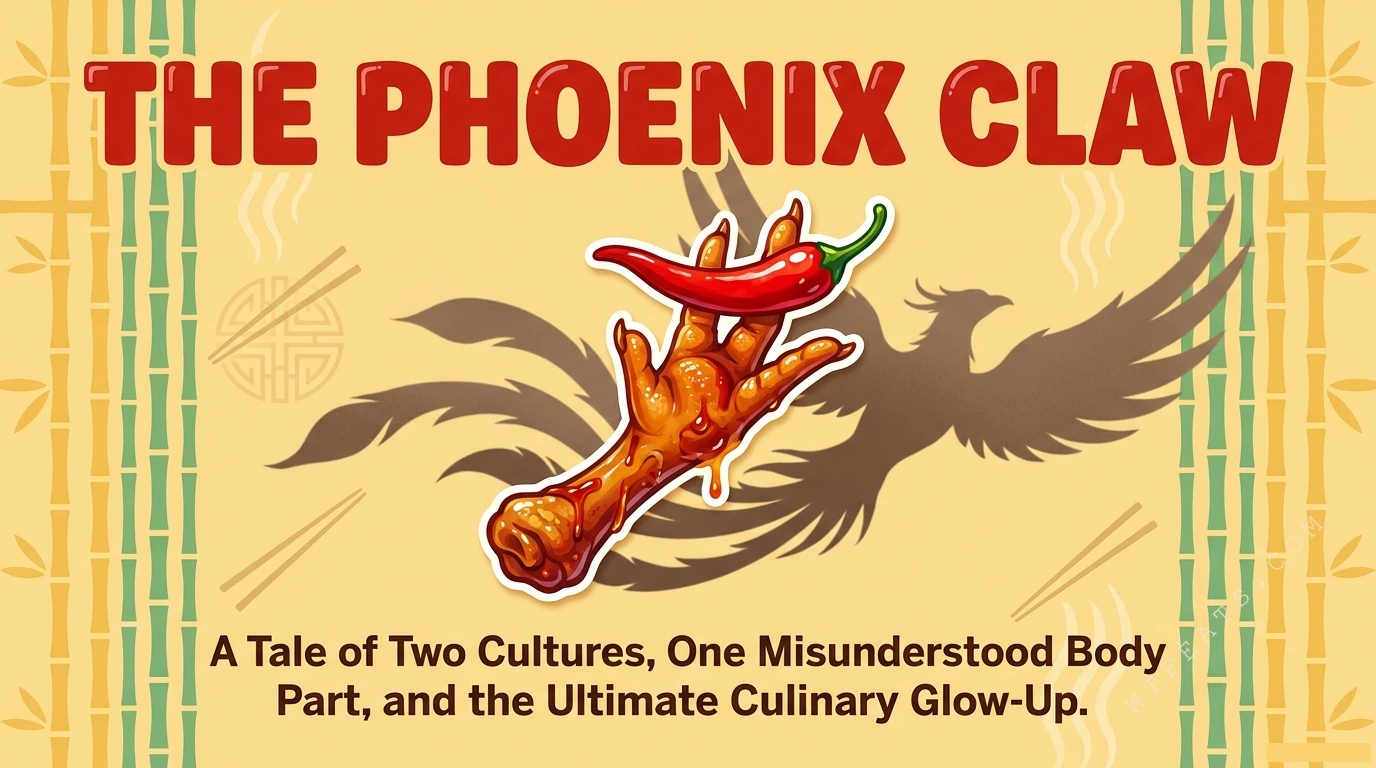
A tale of two cultures, one misunderstood body part, and the ultimate culinary glow-up. The West threw the foot away. China gave it a phoenix's name and a seat at the banquet.

The Phoenix Claw title illustration: a glossy braised chicken foot with a phoenix shadow
The Divide
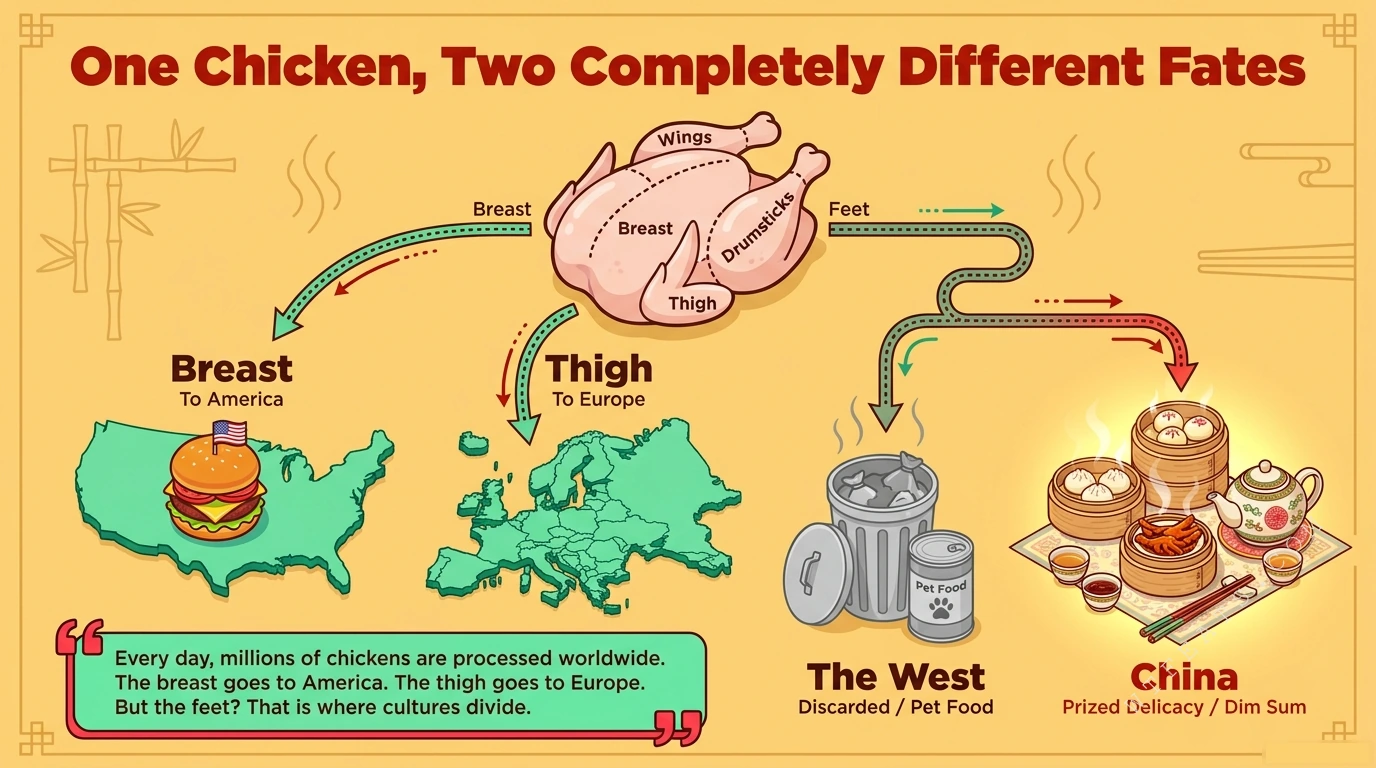
One chicken, two fates: breast to America, thigh to Europe, feet to China

One chicken, two completely different fates.

Every day, millions of chickens are processed worldwide. The breast goes to America. The thigh goes to Europe. But the feet? That is where cultures divide: discarded or rendered into pet food in the West, prized as a delicacy in China.

The Philosophy
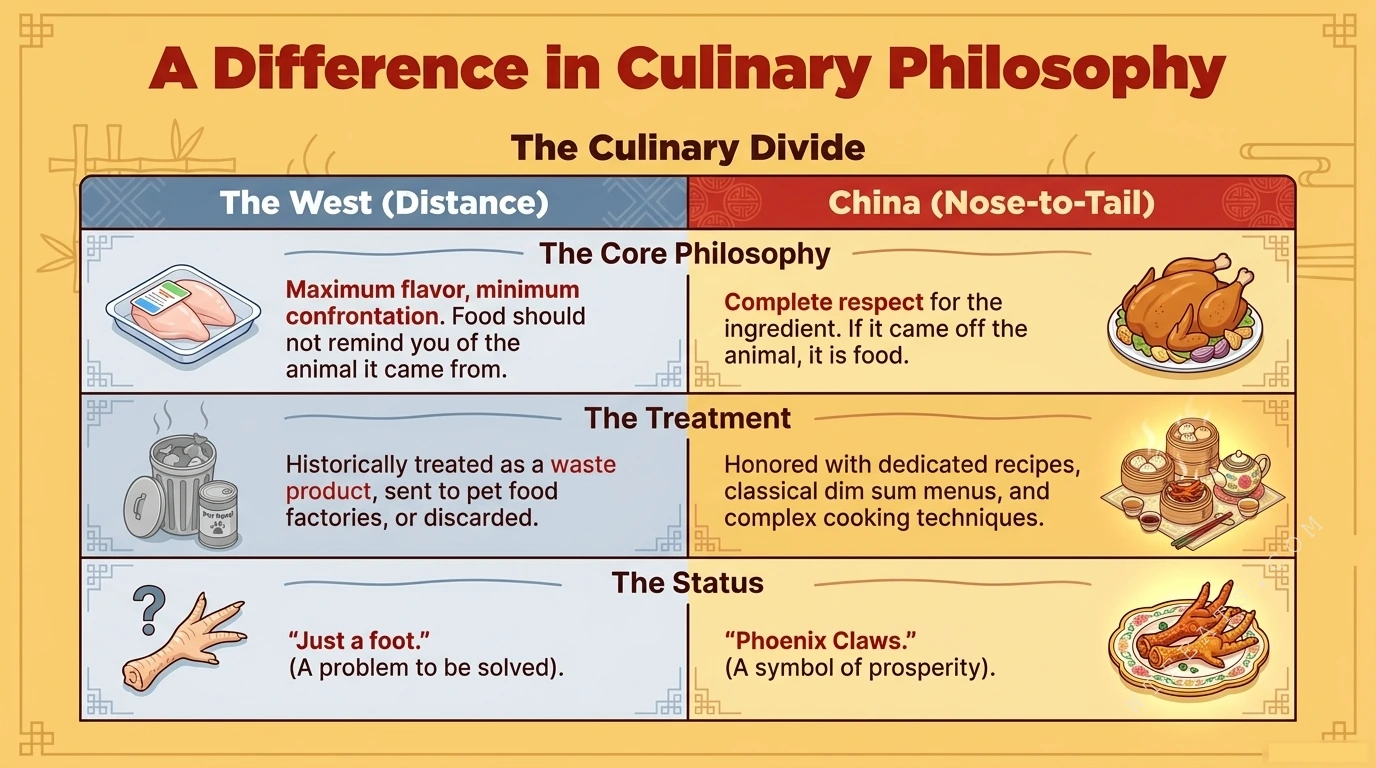
The culinary divide: Western distance versus Chinese nose-to-tail philosophy

Distance versus nose-to-tail.

One philosophy wants maximum flavor with minimum confrontation — food should not remind you of the animal. The other shows complete respect for the ingredient: if it came off the animal, it is food. One sees a problem to be solved. The other sees a symbol of prosperity.

The Trade
A cargo ship full of chicken feet and one billion dollars in coins

America's trash became China's treasure.

By the 1990s, American poultry plants were paying to dispose of feet. Then trade routes opened, and the US discovered China would enthusiastically buy what they were throwing away. At its peak, the US exported over $1 billion worth of chicken feet to China annually.

Translation: one country's waste stream is another country's supply chain.

The Name
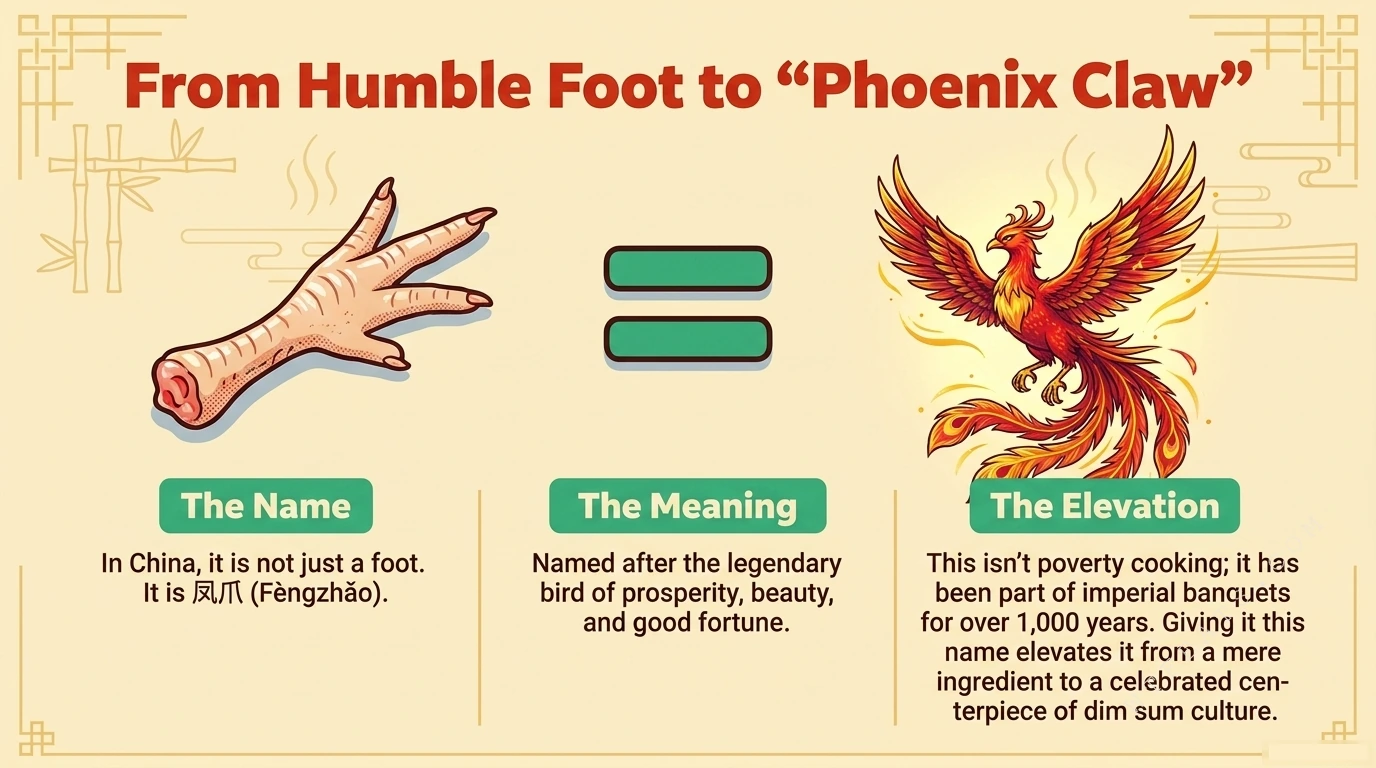
From humble foot to Phoenix Claw: the name, the meaning, the elevation

From humble foot to “Phoenix Claw.”

In China it is not just a foot — it is 凤爪 (Fèngzhǎo), named after the legendary bird of prosperity, beauty, and good fortune. This is not poverty cooking: it has been part of imperial banquets for over 1,000 years. The name elevates a mere ingredient into a celebrated centerpiece of dim sum culture.

The Anatomy
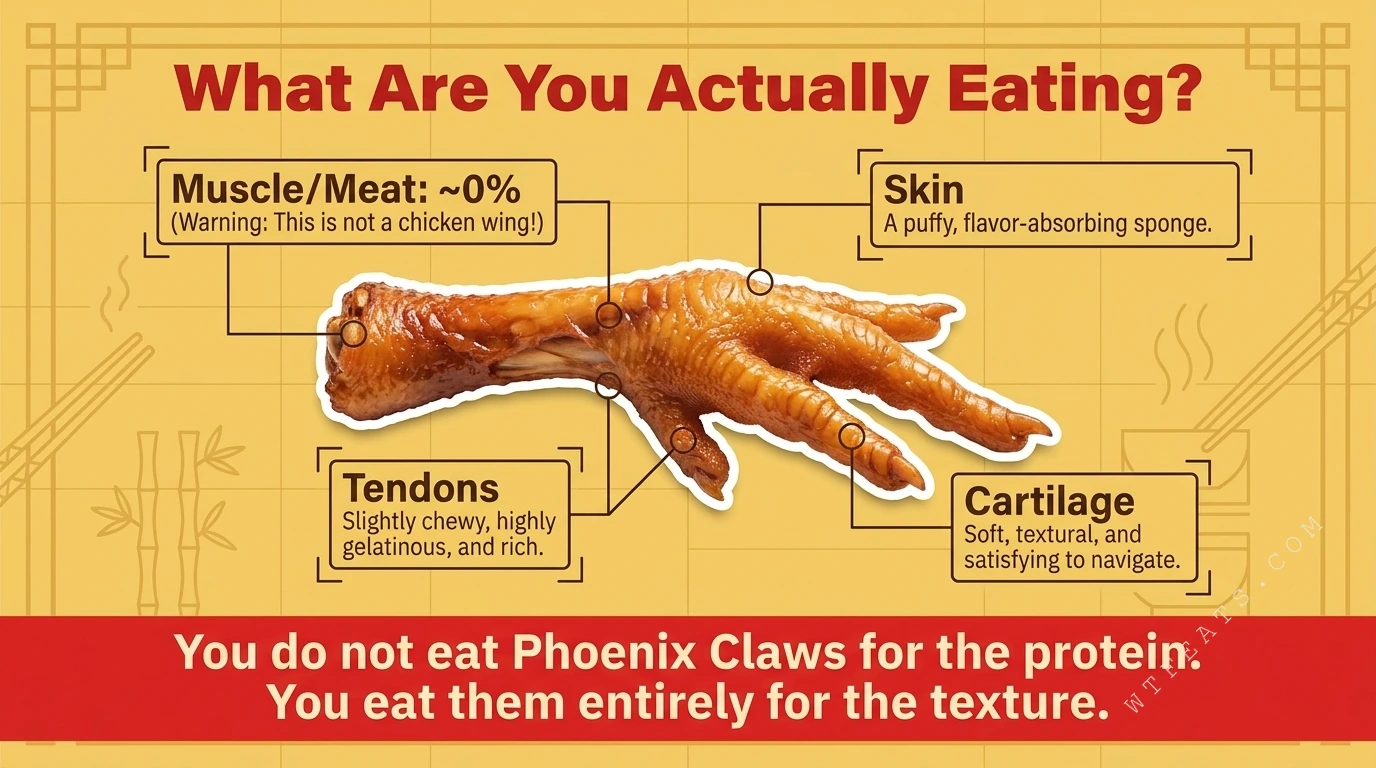
Anatomy of a phoenix claw: skin, tendons, cartilage, and roughly zero percent muscle

What are you actually eating?

Muscle content: roughly zero. (Warning: this is not a chicken wing.) Instead you get skin — a puffy, flavor-absorbing sponge; tendons — slightly chewy, highly gelatinous, and rich; and cartilage — soft, textural, and satisfying to navigate.

You do not eat Phoenix Claws for the protein. You eat them entirely for the texture.

Phase 1
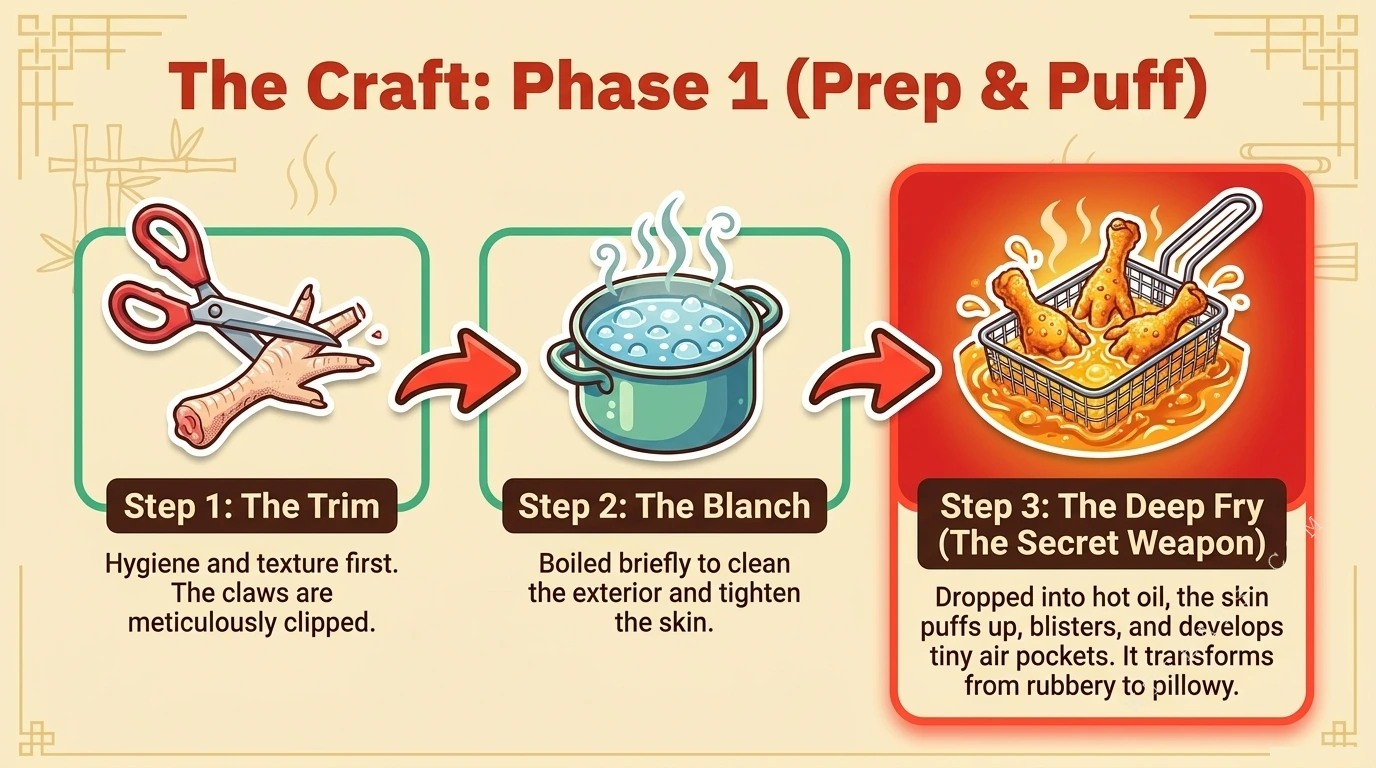
The craft phase one: trim the claws, blanch, then deep fry to puff the skin

Prep and puff.

First the trim: hygiene and texture come first, and the claws are meticulously clipped. Then the blanch: a brief boil cleans the exterior and tightens the skin. Finally the secret weapon — the deep fry. Dropped into hot oil, the skin puffs up, blisters, and develops tiny air pockets. It transforms from rubbery to pillowy.

Phase 2
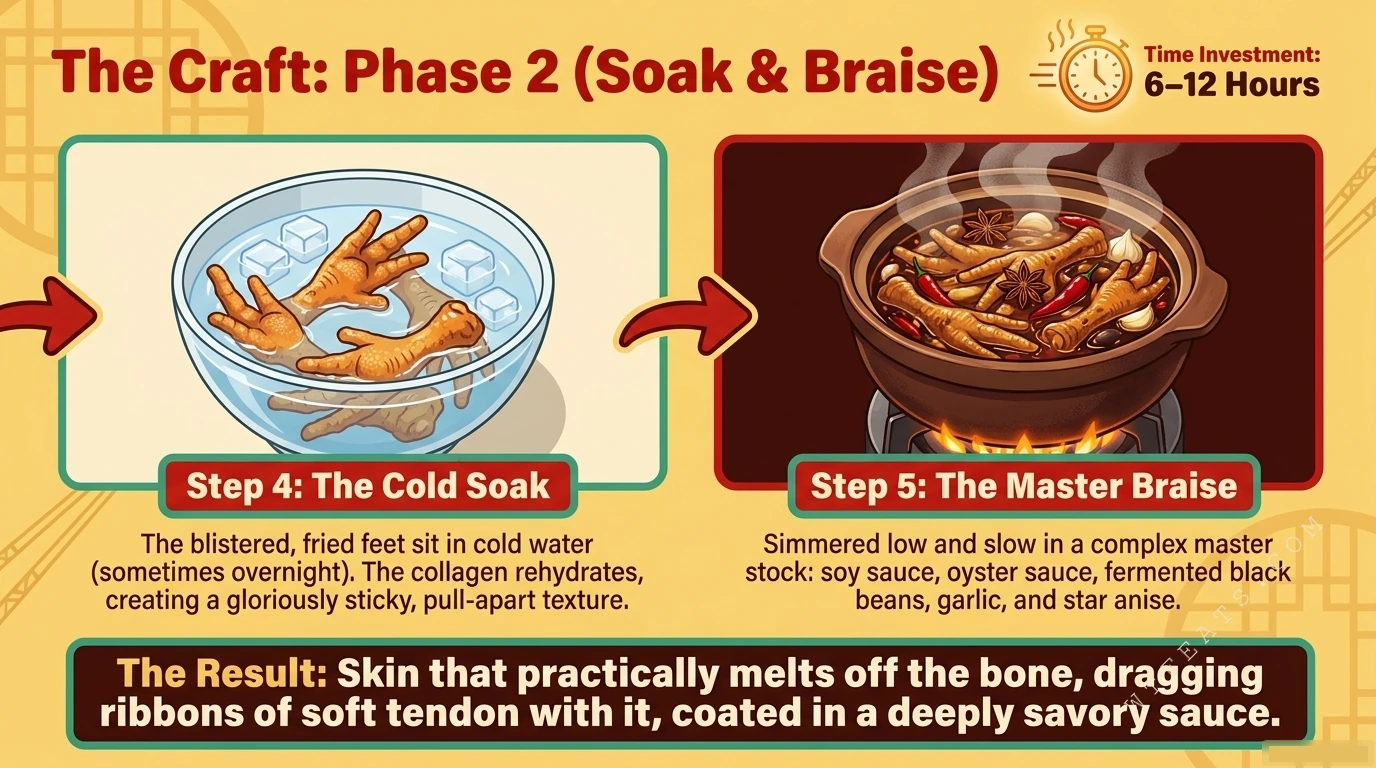
The craft phase two: cold soak, then a six to twelve hour master braise

Soak and braise, low and slow.

The blistered, fried feet sit in cold water — sometimes overnight — while the collagen rehydrates into a sticky, pull-apart texture. Then comes the master braise: 6–12 hours simmered in soy sauce, oyster sauce, fermented black beans, garlic, and star anise.

The result: skin that practically melts off the bone, dragging ribbons of soft tendon with it, coated in a deeply savory sauce.

The Menu
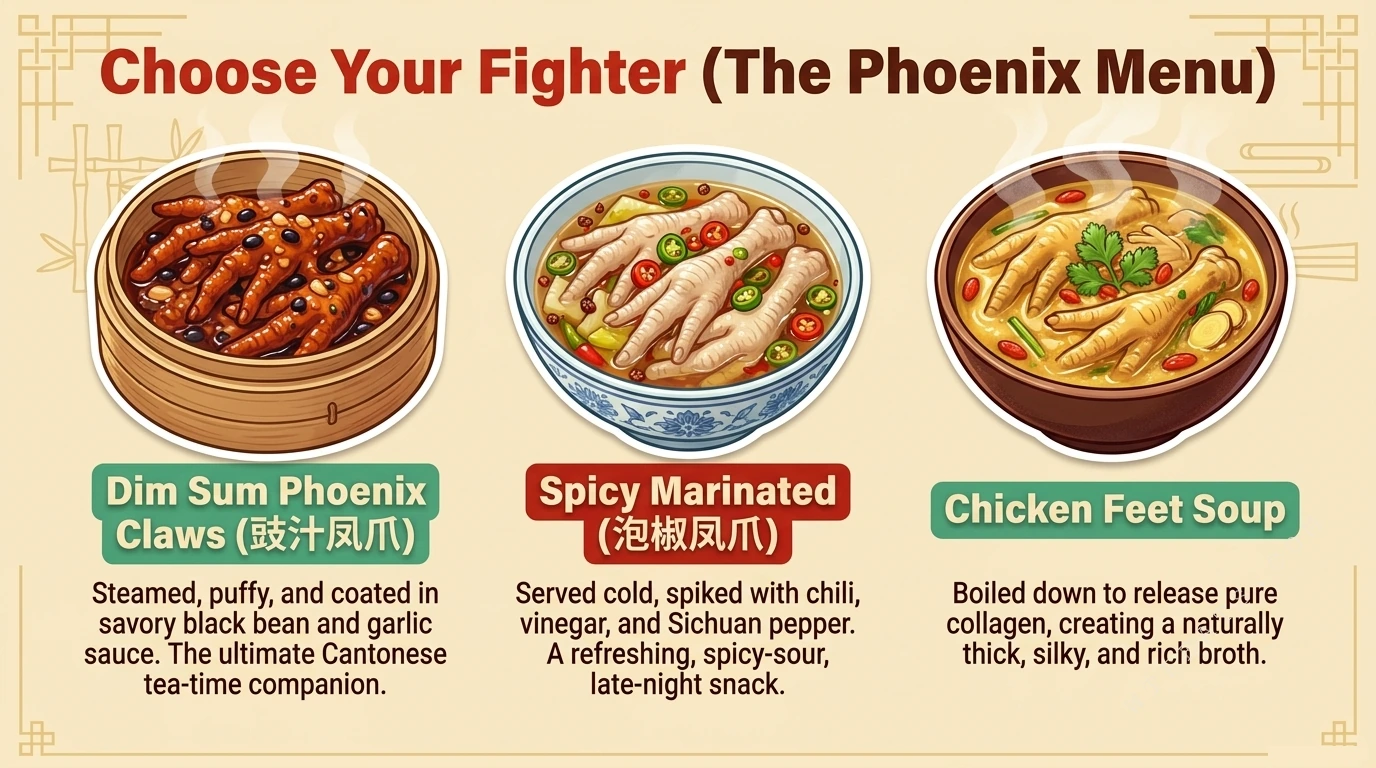
The Phoenix Menu: dim sum phoenix claws, spicy marinated, and chicken feet soup

Choose your fighter.

Dim sum Phoenix Claws (豉汁凤爪): steamed, puffy, coated in black bean and garlic sauce. Spicy marinated (泡椒凤爪): served cold with chili, vinegar, and Sichuan pepper. Chicken feet soup: boiled down to pure collagen for a silky, rich broth.

The Experience

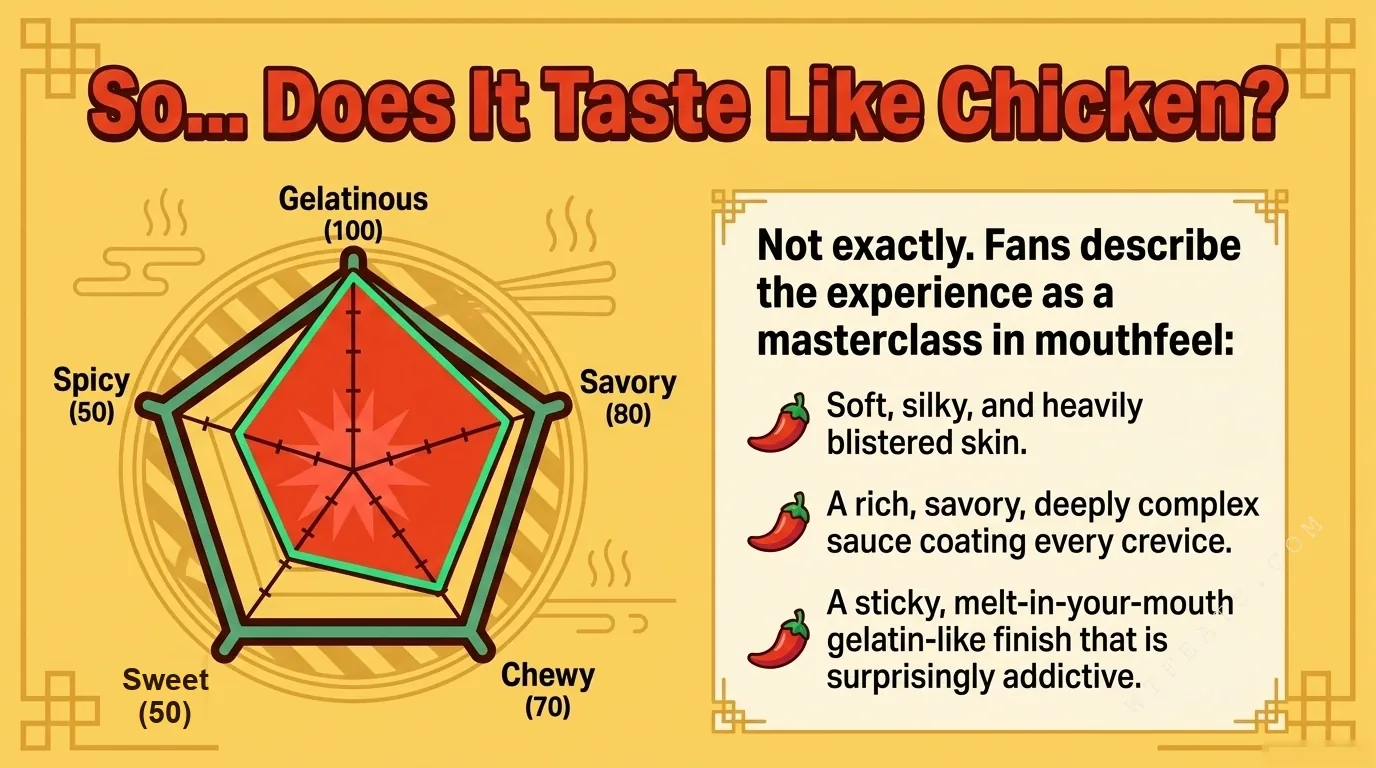
So... does it taste like chicken?

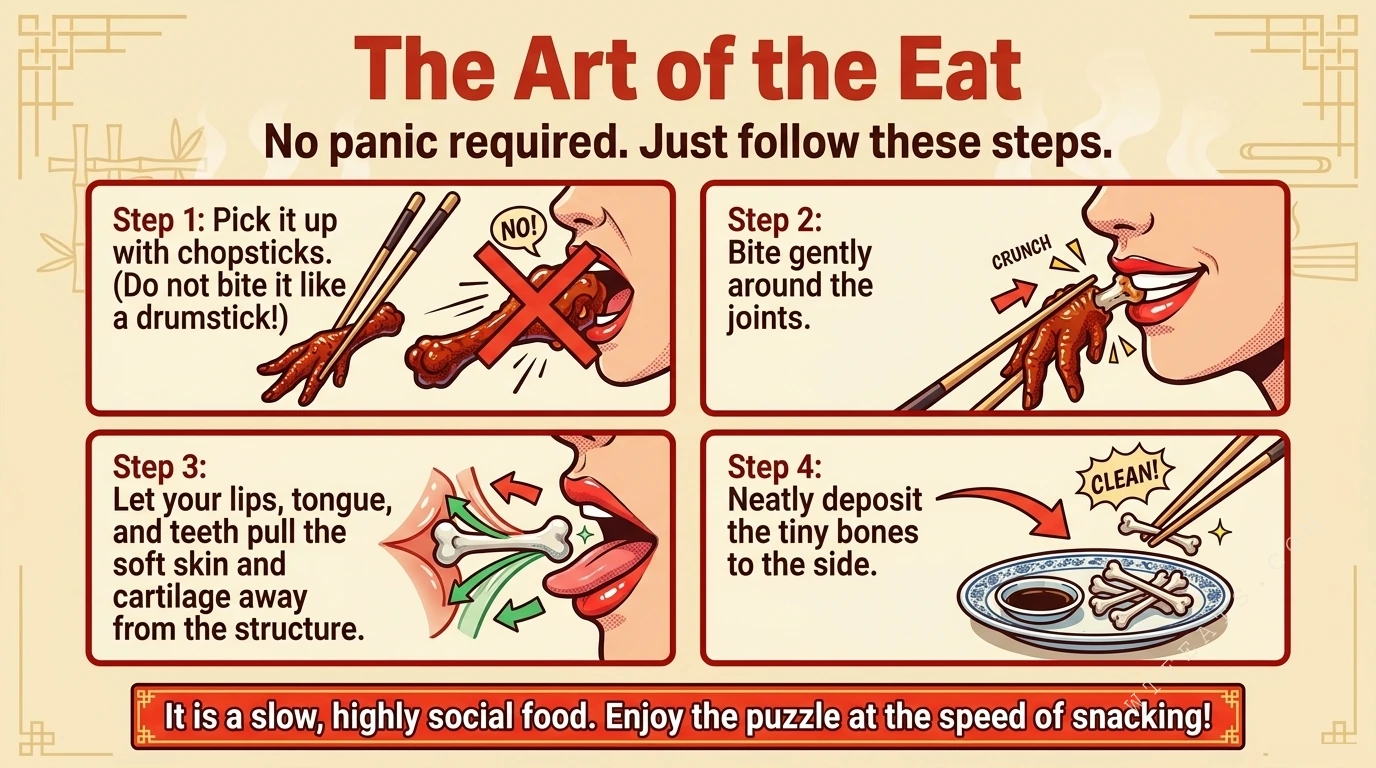
Not exactly. Fans describe a masterclass in mouthfeel: soft, silky, heavily blistered skin; a rich, deeply complex sauce in every crevice; and a sticky, melt-in-your-mouth gelatin finish. And there is an art to eating it: pick it up with chopsticks, bite gently around the joints, let lips and teeth pull the soft tissue away, and neatly deposit the tiny bones to the side. It is a slow, highly social food.

The Lesson
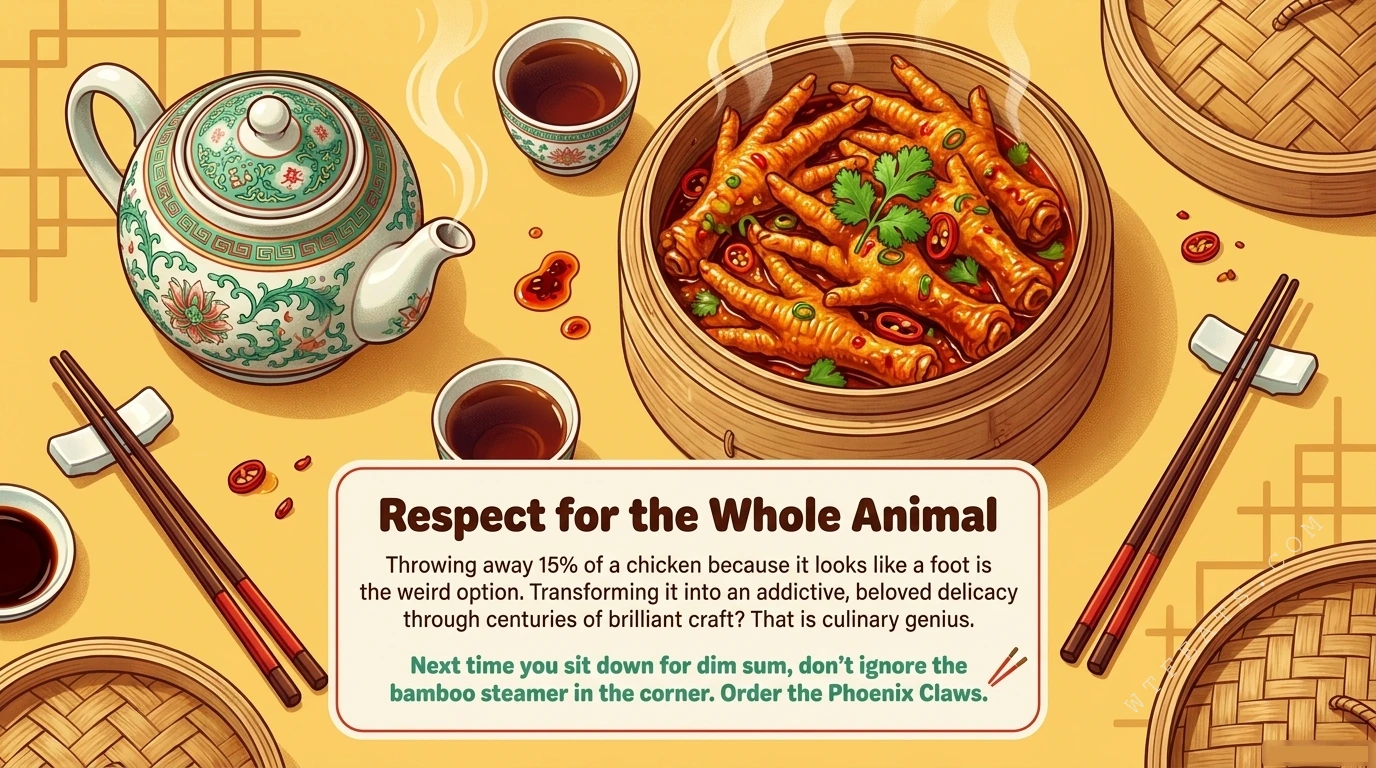
A dim sum table with phoenix claws and tea: respect for the whole animal

Respect for the whole animal.

Throwing away 15% of a chicken because it looks like a foot is the weird option. Transforming it into an addictive, beloved delicacy through centuries of brilliant craft? That is culinary genius. Next time you sit down for dim sum, do not ignore the bamboo steamer in the corner. Order the Phoenix Claws.

Read the full craft