Visual Story

The geometry of texture

A pig ear is immediately, unmistakably, undeniably a pig ear. There is no culinary sleight of hand. What it contains is cartilage — an enormous amount of it, arranged in a precise geometric structure that produces a texture unlike anything else in the culinary world. Here is the journey from raw anatomy to cold platter, stage by stage.

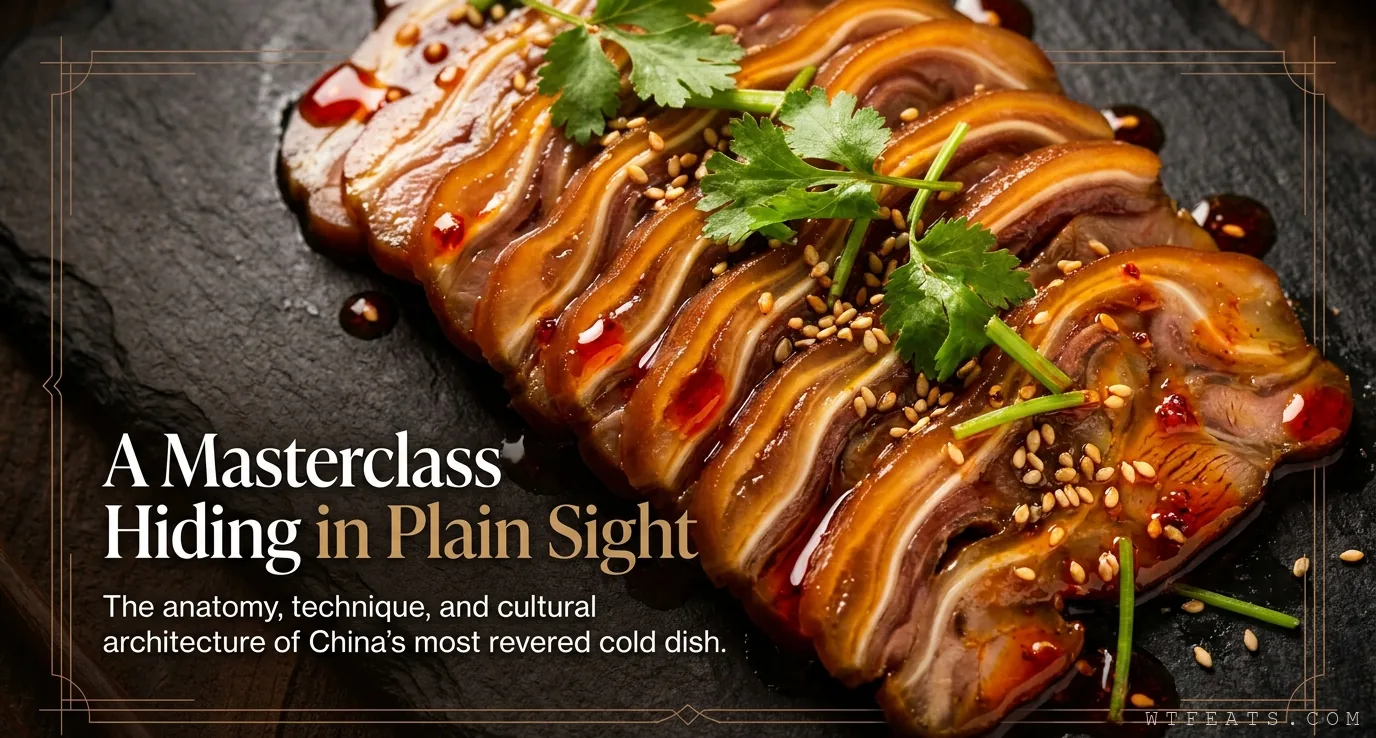
A Masterclass Hiding in Plain Sight: glossy braised pig ear slices on dark slate
The Resume
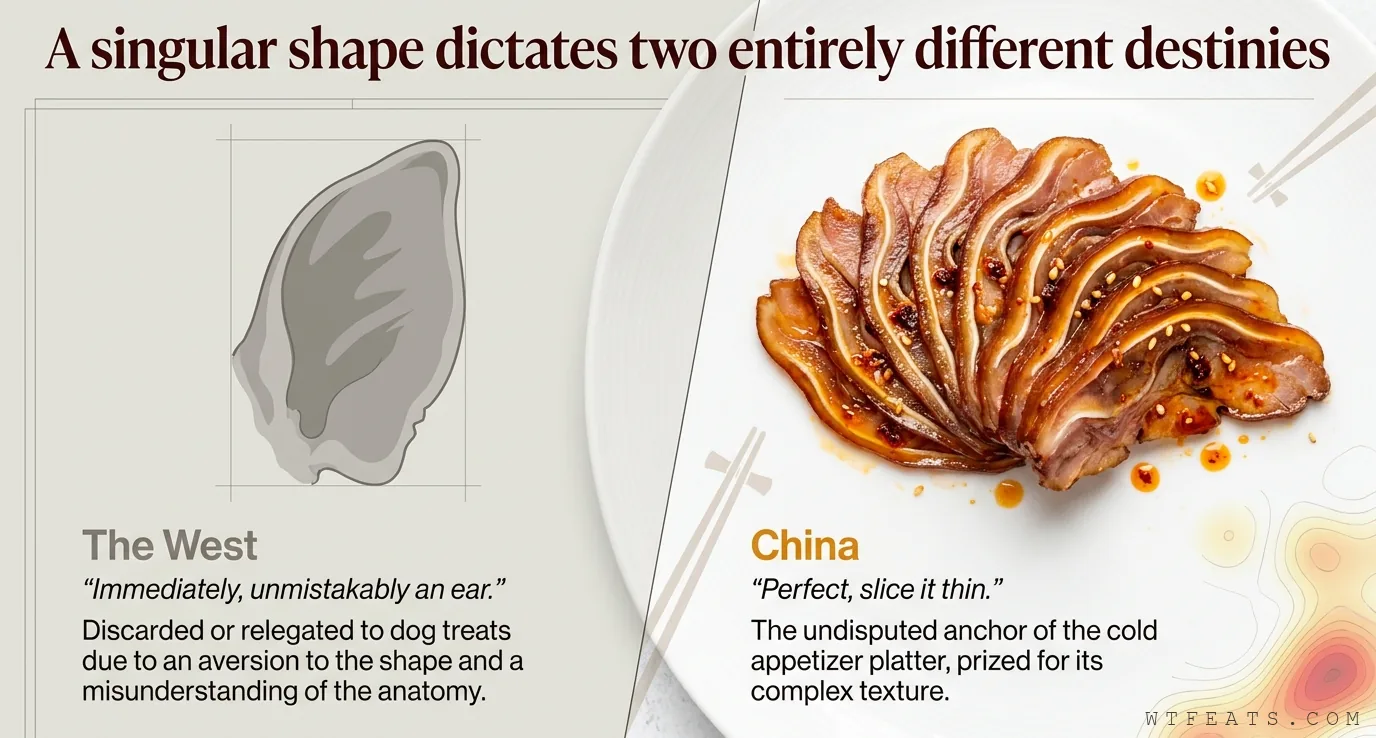
A singular shape dictates two entirely different destinies: the West discards it, China slices it thin

One shape. Two destinies.

The West looked at a pig ear and said: no thank you, we'll pass — discarded or relegated to dog treats. Chinese food culture looked at the exact same shape and said: perfect, slice it thin, we need it for the cold platter. The difference is not squeamishness versus bravery. It is an understanding of what a pig ear actually contains.

Same ear. Completely different destiny.
The Anatomy
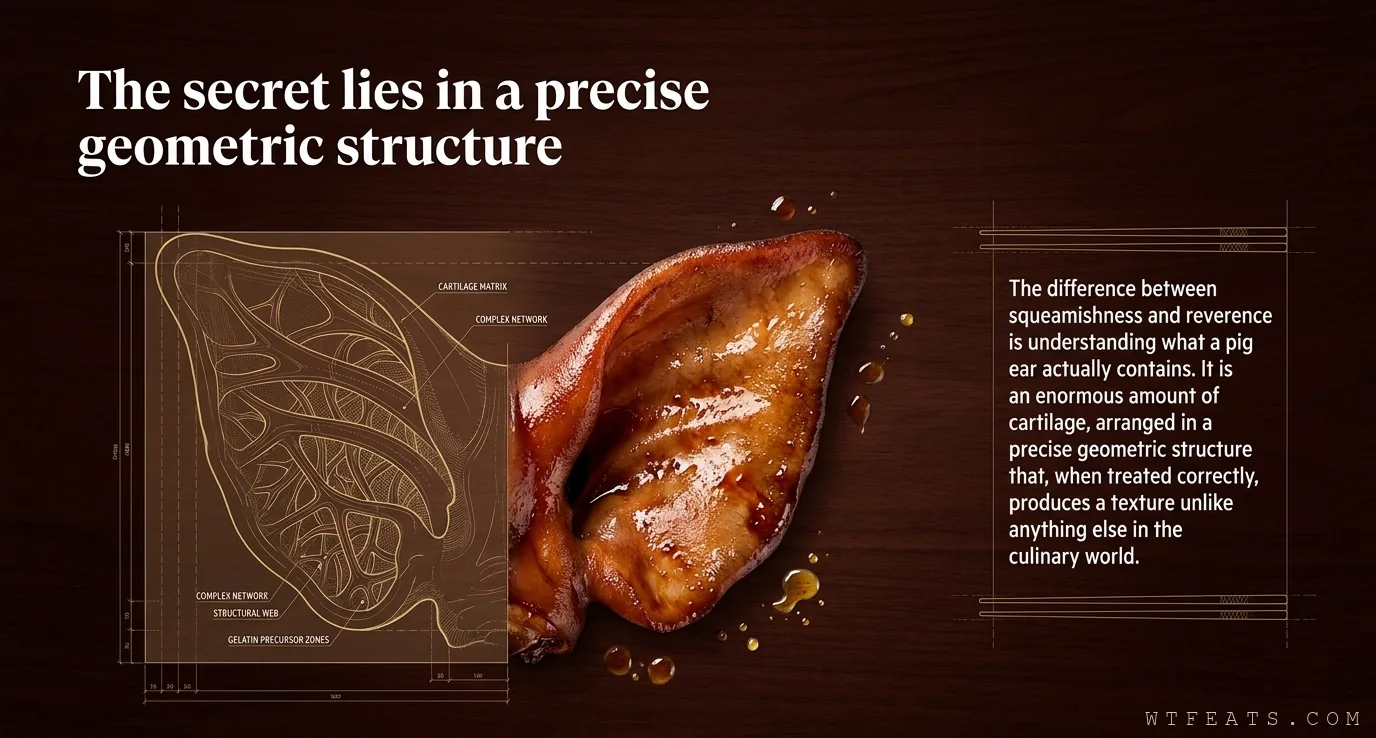
The secret lies in a precise geometric structure: cartilage matrix, complex network, gelatin precursor zones

The secret is in the structure.

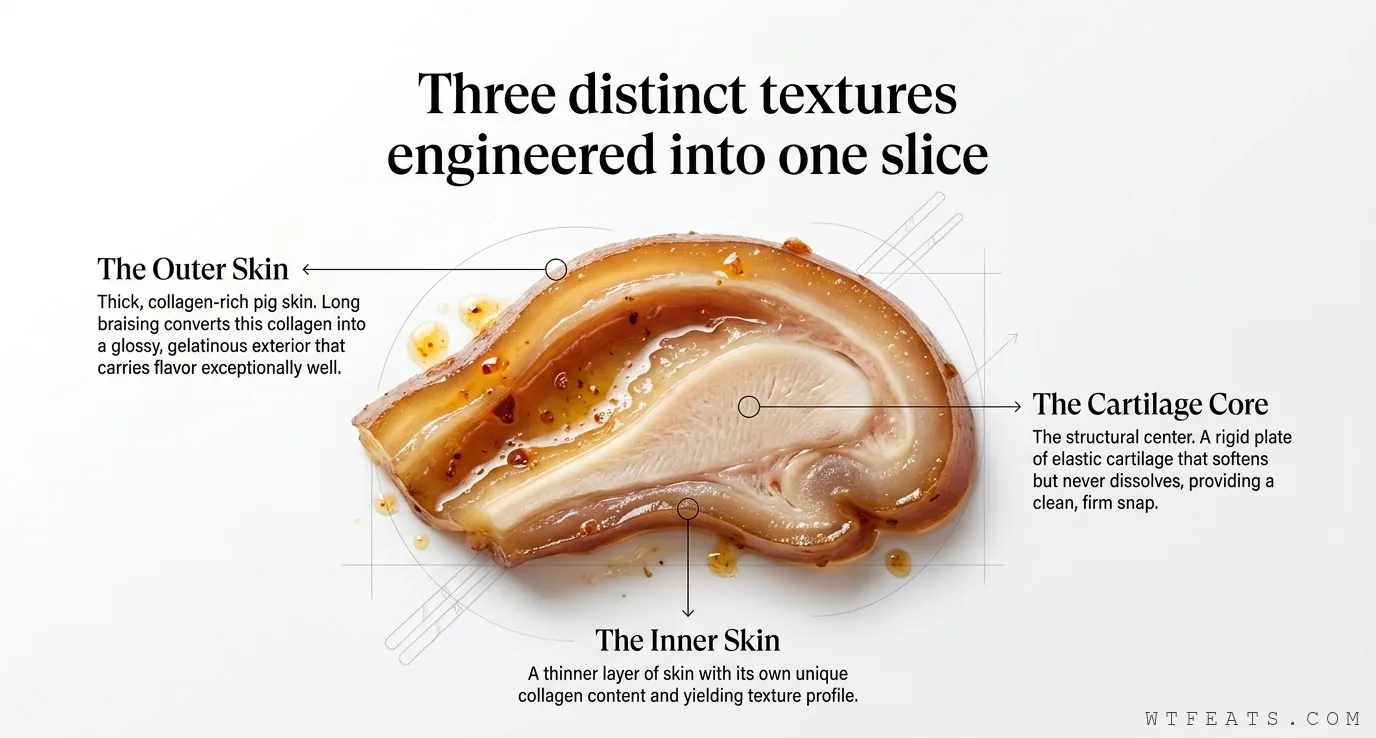
A pig ear is a layered structure. The outer skin: thick, collagen-rich. The cartilage core: a rigid plate of elastic cartilage that softens but never dissolves. The inner skin: a thinner layer with its own collagen content. Three layers. After braising and chilling, a cross-section reveals glossy skin, firm cartilage, glossy skin again — all carrying the flavor of the braising liquid.

The structure matters, and the right structure makes everything taste better.

The Cross Section
Three distinct textures engineered into one slice: outer skin, cartilage core, inner skin

Three textures. One thin slice.

The outer skin converts collagen to gelatin — glossy, slightly sticky, carries flavor exceptionally well. The cartilage core softens from rigid to firm-but-yielding — it maintains its structure and provides a clean snap. The inner skin contributes its own texture profile. Together: a cross-section that is the entire textural vocabulary of the ear in one bite.

This is why pig ear is prized. Not despite its structure — because of it.

The Braise
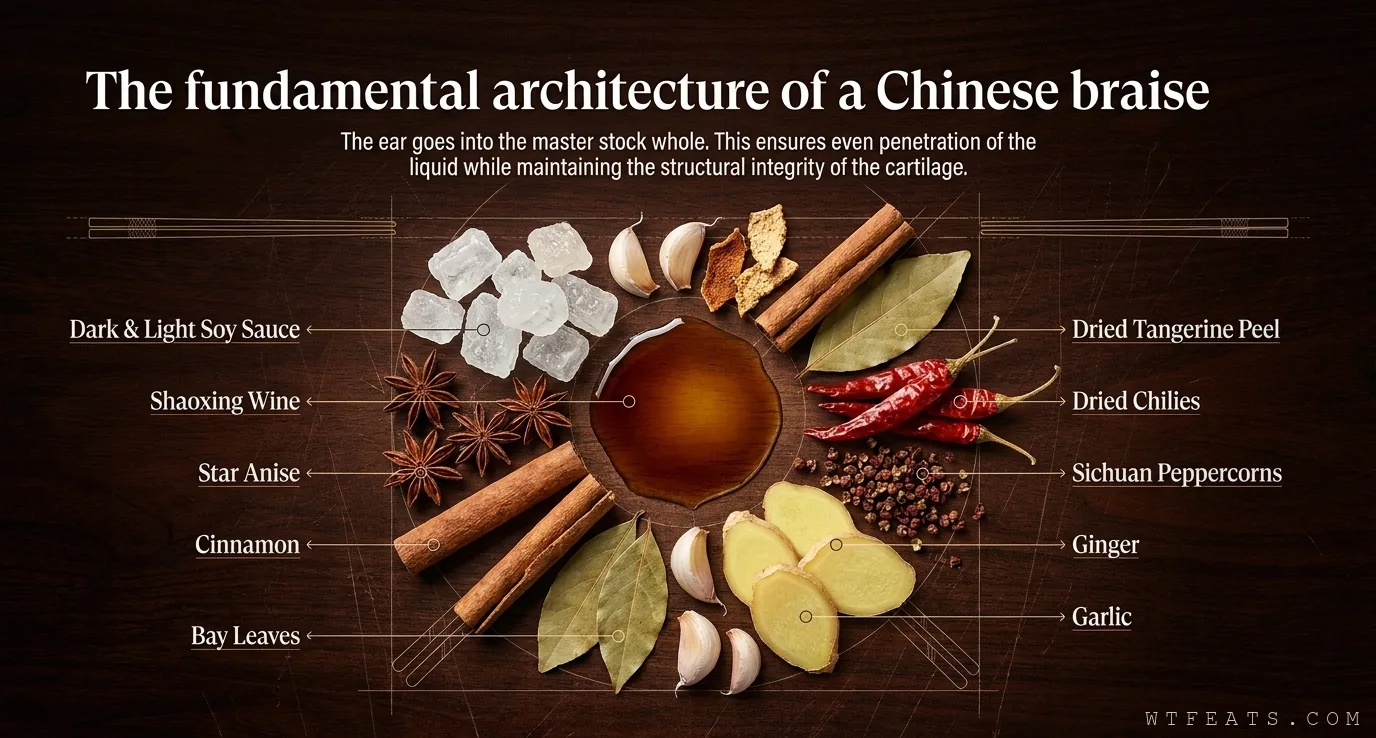
The fundamental architecture of a Chinese braise: soy sauce, Shaoxing wine, star anise, cinnamon, bay leaves, rock sugar, dried chilies, Sichuan peppercorns, ginger, garlic, dried tangerine peel

Master stock. Always master stock.

The aromatics: dark and light soy sauce, Shaoxing wine, rock sugar, star anise, cinnamon, bay leaves, dried chilies, Sichuan peppercorns, ginger, garlic, dried tangerine peel. The same fundamental architecture as every Chinese braise, calibrated differently by every cook. The ear goes in whole — slice after, never before.

Low heat. Ninety minutes minimum. Two hours preferred.

The Transformation
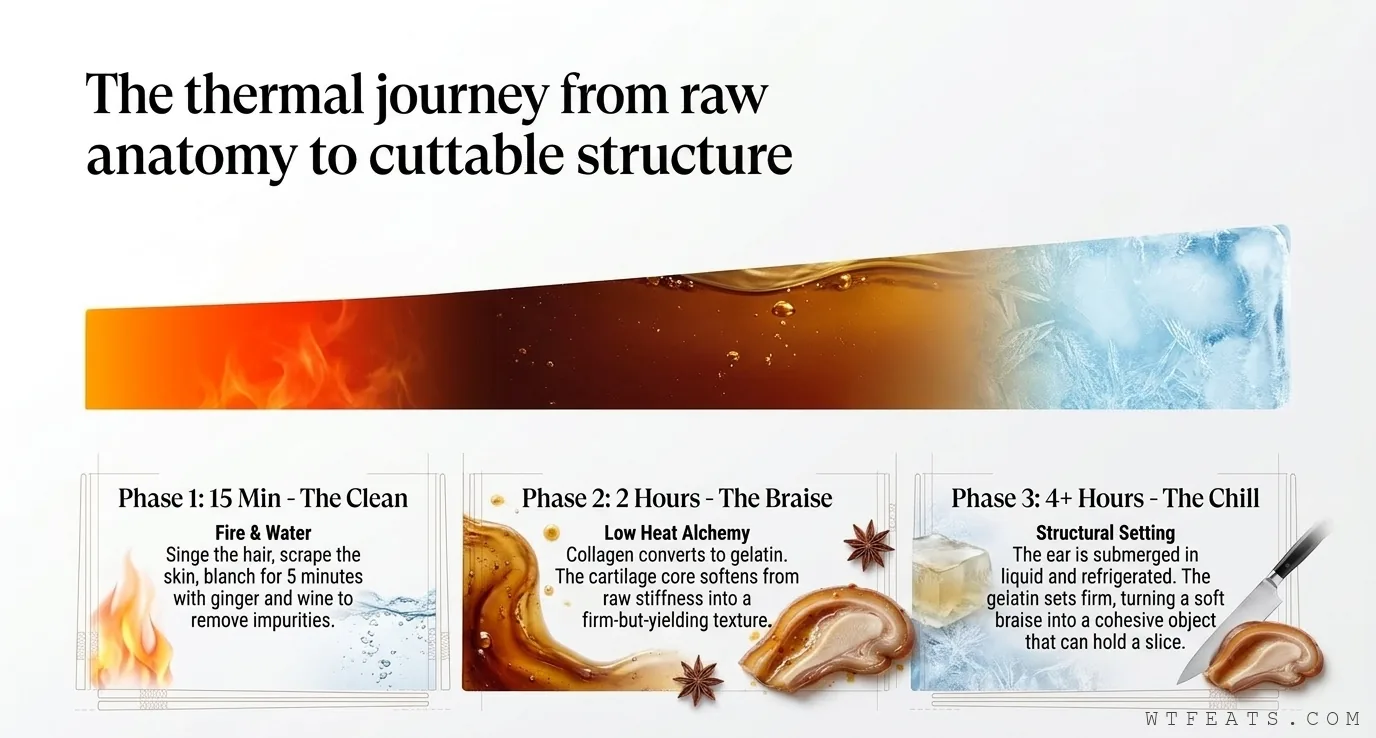
The thermal journey from raw anatomy to cuttable structure: Phase 1 The Clean, Phase 2 The Braise, Phase 3 The Chill

From floppy to firm. From warm to cold.

Phase 1 — The Clean: fifteen minutes. Singe the hair, scrape the skin, blanch with ginger and wine. Phase 2 — The Braise: two hours of low heat. Collagen converts to gelatin; cartilage softens to firm-but-yielding. Phase 3 — The Chill: four hours minimum, overnight better. The gelatin sets, the cartilage becomes the backbone of a cohesive, cuttable structure.

The Slice
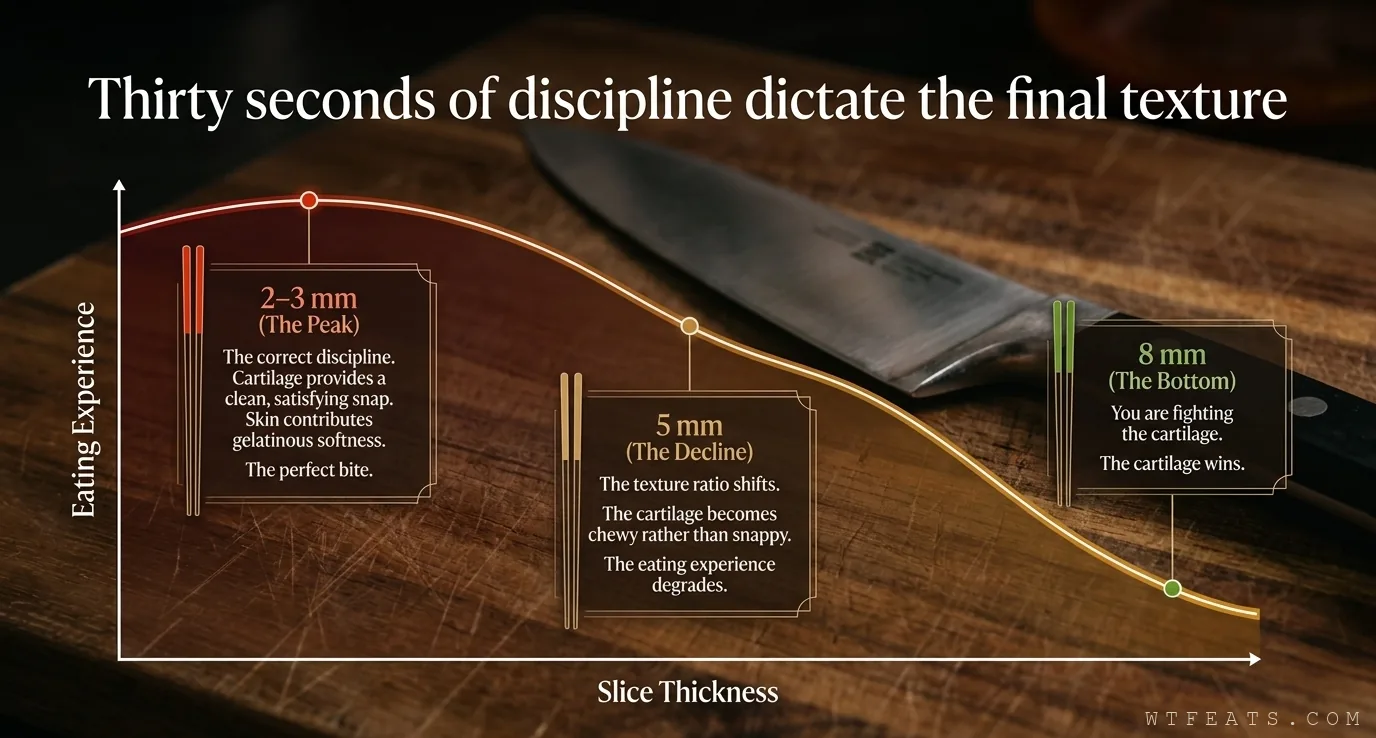
Thirty seconds of discipline dictate the final texture: 2-3mm is the peak, 5mm is the decline, 8mm the cartilage wins

The most important thirty seconds.

At 2–3 millimeters: cartilage provides a clean snap — a satisfying, definitive resistance. The skin layers contribute gelatinous softness as counterpoint. At 5 millimeters: cartilage becomes chewy. The texture ratio shifts. At 8 millimeters: you are fighting the cartilage. The cartilage wins. A sharp knife. A cold ear. Confidence in the cut. This is the discipline.

Two to three millimeters. Deviate at your peril.

The Dressing
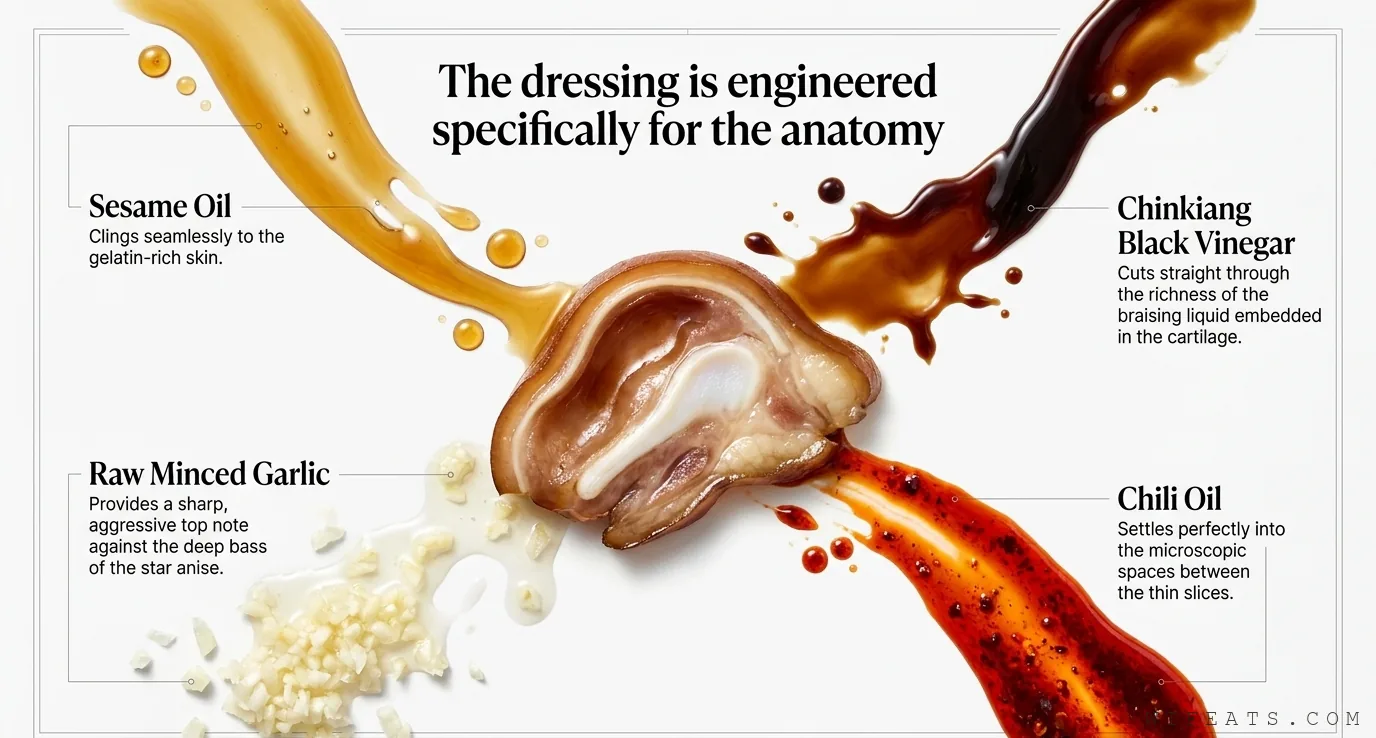
The dressing is engineered specifically for the anatomy: sesame oil, Chinkiang black vinegar, raw minced garlic, and chili oil

Every element does a specific job.

Sesame oil clings to the gelatin-rich skin. Black vinegar cuts through the richness of the braising liquid. Raw garlic provides a sharp top note against the deep bass of star anise. Chili oil settles into the spaces between slices. Every element is doing a specific job. None of it is decoration.

The result: rich and fresh, savory and sharp, gelatinous and snappy.

The Culture
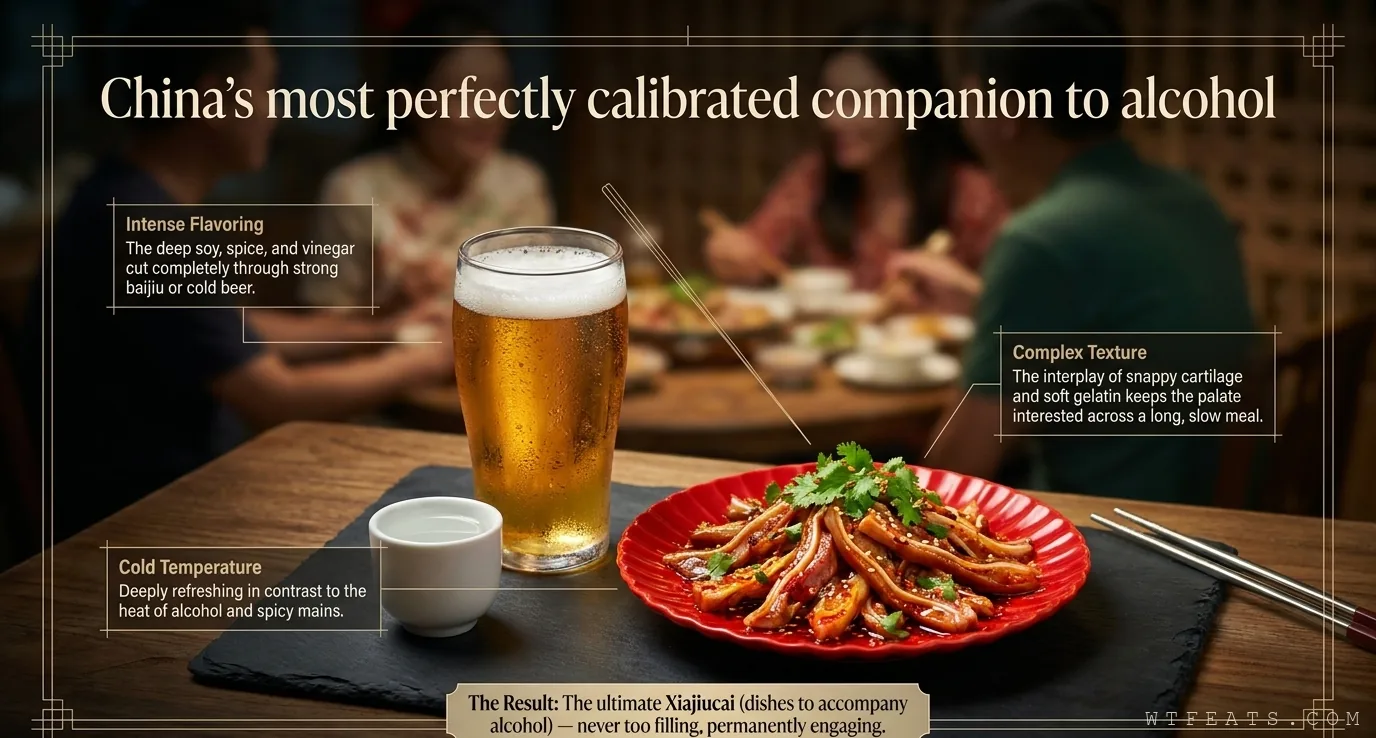
China's most perfectly calibrated companion to alcohol: intense flavoring, complex texture, cold temperature

China's greatest drinking snack.

Pig ear did not end up on the cold platter by accident. Chinese drinking culture — xiàjiǔcài — prizes cold, intensely flavored, texturally interesting small dishes. The intense flavoring cuts through alcohol. The complex texture keeps eating interesting across many pieces. The cold temperature is refreshing. The portion size is calibrated for slow consumption.

In every Chinese city with a drinking culture, pig ear is on the menu.

The Numbers
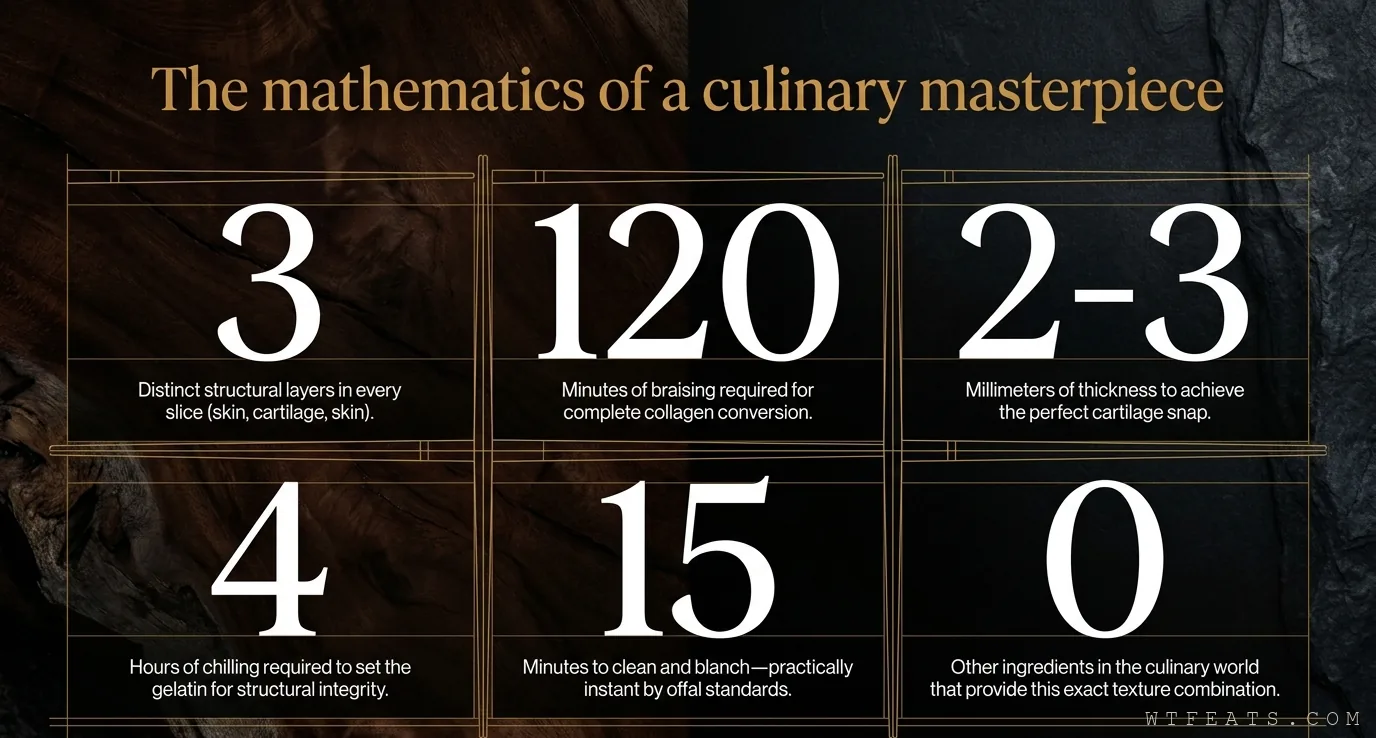
The mathematics of a culinary masterpiece: 3 layers, 120 minutes, 2-3mm, 4 hours, 15 minutes, 0 other ingredients

The mathematics of a masterpiece.

3 distinct structural layers in every slice. 120 minutes of braising for complete collagen conversion. 2–3 millimeters — the correct slice thickness. 4 hours minimum chilling before slicing. 15 minutes cleaning time. 0 other ingredients that provide this exact texture combination. The numbers don't lie. The ear was listening the whole time.

The Verdict
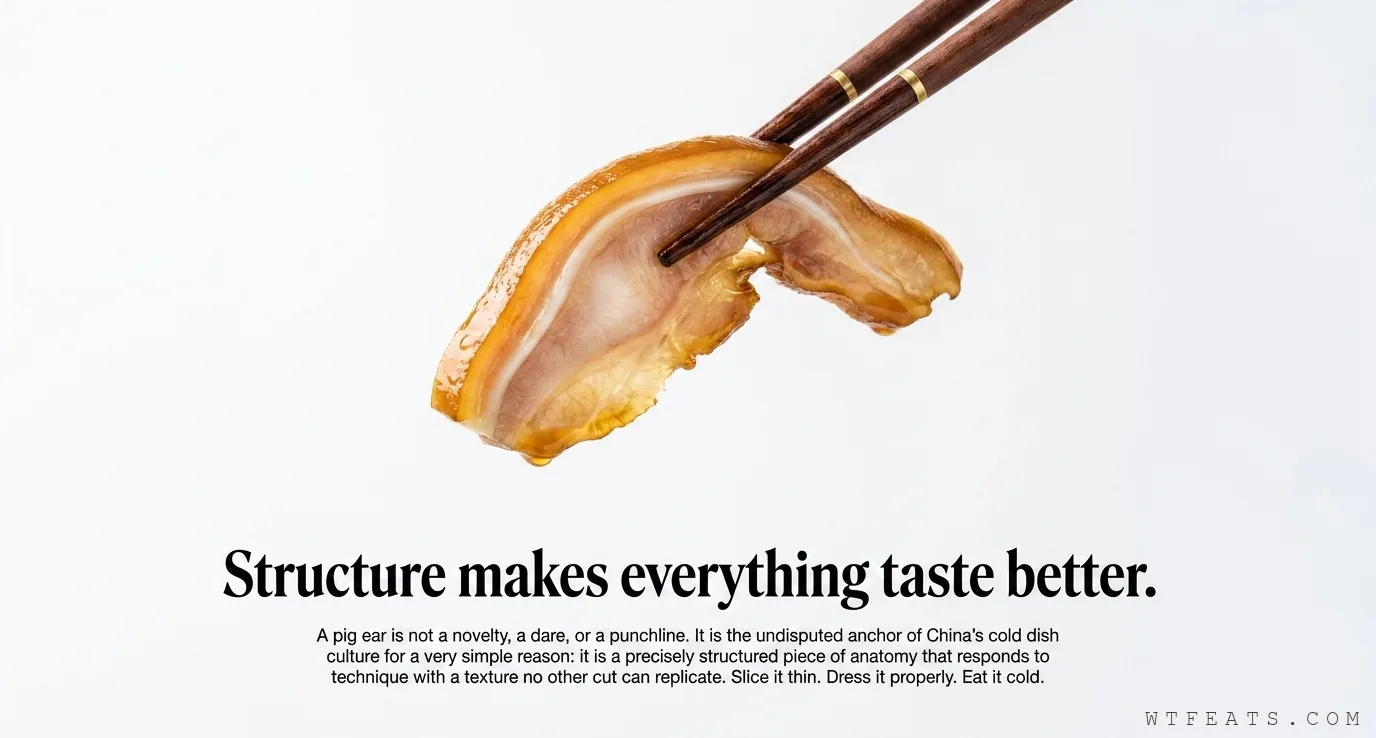
Structure makes everything taste better: a pig ear slice held by chopsticks

The ear had something to say.

"A pig ear is not a novelty, a dare, or a punchline. It is the undisputed anchor of China's cold dish culture for a very simple reason: it is a precisely structured piece of anatomy that responds to technique with a texture no other cut can replicate. Slice it thin. Dress it properly. Eat it cold with something to drink."

Read the full craft